Workers’ power begins with identity. When workers name who they are, what they do and the value of their labour, they claim power. The process of informalisation leads to a fragmented sense of identity. This fragmentation is particularly visible in the Expanded Public Works Programme (EPWP), where predominantly women perform essential care work under conditions designed to blur the line between employment and volunteerism. In 2025, care workers in the social sector of the EPWP began challenging that fragmentation through storytelling.
A festival of stories
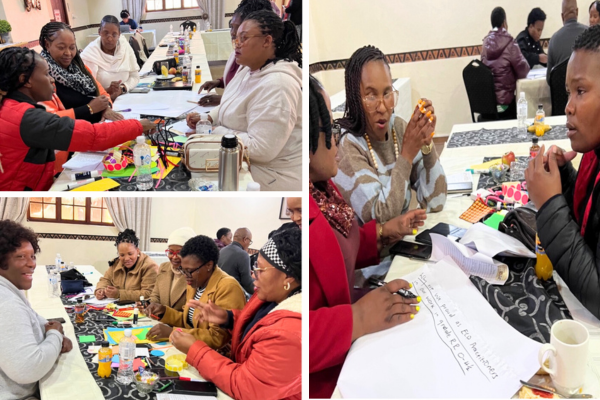
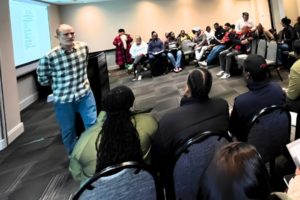
Photo: LRS supported the online and offline storytelling sessions for each group over a few months. These are ECD Practitioners at their storytelling process.
LRS supported the process of collective emergence by creating spaces where care workers could name their identity and analyse their work together. Through the LRS Transforming Public Care Programmes in South Africa initiative, we brought together three groups of EPWP care workers: Food Handlers organised under the Gauteng Forum, Early Childhood Development practitioners organised under the South African Democratic Teachers’ Union, and Community Health Workers in the South African Care Workers Forum. Together, they are advocating for decent work and fair remuneration.
Food Handlers, Community Health Workers and ECD practitioners produced 60 personal stories about their struggles and lived experiences as care workers.
Our own stories are one of the strongest advocacy tools for decent work. When care workers speak in their own voice, they make the work visible, they show the value of what they do, and they break the silence that keeps care work invisible. A good story connects on three levels:
- Head – it helps workers understand the system, the facts, the conditions.
- Heart – it makes workers feel the dignity, the struggle and the pride of the work.
- Hands – it moves workers to action. It motivates organisation and advocacy.
The care workers storytelling process was about writing and also recognising the power of storytelling in our own cultures. We come from communities where stories teach, heal, remind, warn and connect. And we also know the power of stories from TV soapies where people connect deeply with characters because they recognise themselves. In the same way, when care workers hear each other’s stories, they immediately say: “That is also my life.”
The EPWP care workers stories speak to the three pillars of the care workers platform. The stories expose the contradiction of public care programmes: vital work is performed under conditions that deny workers recognition, security, rights and dignity. In telling their stories, workers named themselves publicly as care workers, activists, women and breadwinners. Identity became the starting point for value, advocacy, organising and power.
“Our identity is not defined by what others say or how they treat us. Our identity is in who we believe we are.”
– Sheila Martins, ECD Practitioner
The three groups of care workers in the social sector of EPWP work in separate policy systems with different mandates, budgets, routines and reporting lines. Food Handlers work within the National School Nutrition Programme, Community Health Workers in primary health care, and ECD practitioners in early learning services. On paper, their work is separated. In practice, they form part of the same care economy.
Across nutrition, healing and early learning, the State entrusts the wellbeing of an entire generation of children to women while failing to recognise and reward this labour as decent work. Through storytelling and collective reflection, care workers examined both their responsibilities and the systems they sustain. Their accounts revealed common patterns: insecure employment, low stipends, and the persistent framing of care work as an extension of women’s “natural” roles rather than skilled labour. What appears administratively fragmented is, in fact, a single ecosystem of care.
“The closer you are to care, the less valued you are. We all dream of being recognised and valued, and achieving success. Our dreams are the same, which means we are all connected.”
– Salaama Abrahams, Community Health Worker
Turning experience into collective knowledge
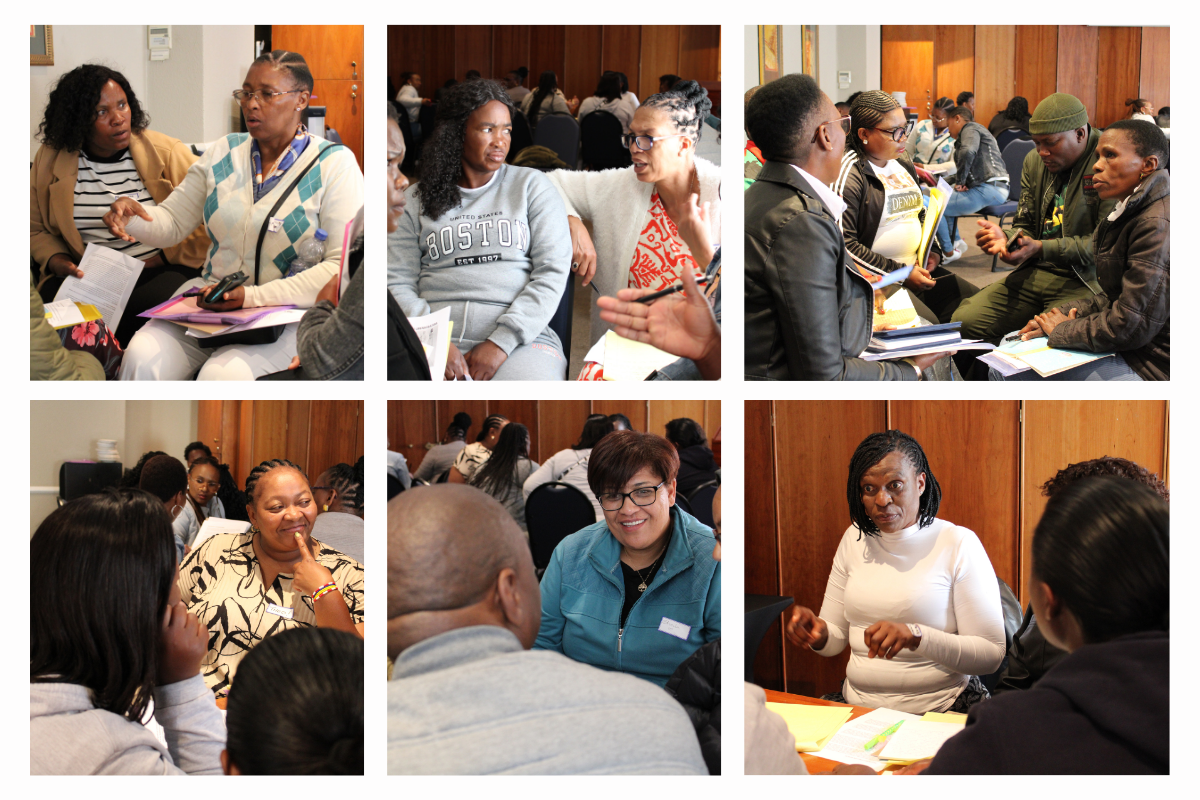
The shared struggles and aspirations came into sharper focus in October 2025, when care workers from the three sectors met at the LRS Care Workers Convergence in Johannesburg. The convergence was designed as a festival of stories: a space where Volunteer Food Handlers, Community Health Workers and ECD practitioners could analyse their lived experiences together and affirm the value of care work. It laid the foundation for a national care workers platform by bringing together voices that had previously been fragmented across programmes and sectors.
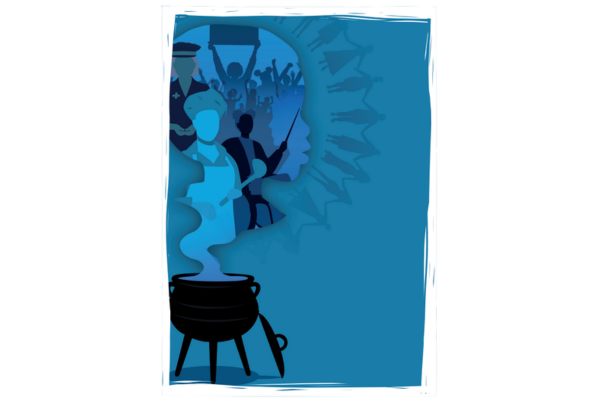
LRS used the symbol of a three-legged traditional pot, associated with sustenance and community, to honour the unique contributions of the workers in each sector: nourishment through Volunteer Food Handlers, healing through Community Health Workers, and shaping futures through ECD practitioners. The pot symbol captures both the interconnectedness of care work in EPWP and the emergence of a shared identity.
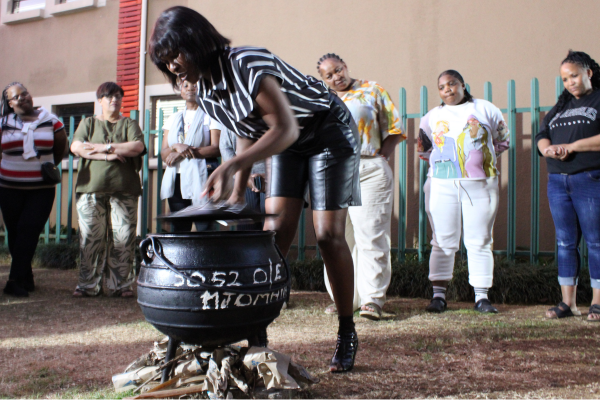
The three legged pot of care. Each leg represents a programme in the social sector of EPWP. Each leg holds a sector with many stories.
“I have worked in all three legs of the pot. For years I felt stuck and exploited. But today we have come together under one identity and one voice. We are proud of our work and what we have achieved.”
– Trinity Mbubu, ECD Practitioner
Workers who had previously organised within separate programmes began articulating a shared agenda.
Convergence outcomes:
- A national care workers platform advocating for decent work in the EPWP. The platform’s three pillars:
Visibility: Care work is work.
Value: Care work drives economies.
Justice: Care workers deserve dignity and rights. - The declaration of 7 February as Care Workers’ Day.
- Five collective demands for decent care work
- 60 care worker stories as advocacy tools.
"Through the care workers platform we are rising — united and strong. This is the true meaning of imbokodo.”
– Zodwa Rannyadi, Former Volunteer Food Handler
“The emotional, financial, and mental well-being of care workers has been overlooked for too long. Now, as the muzzles fall away and we have shared identity and our voices are heard, we begin to recognise our collective value. And it is more than voice, it is sound. Sound travels. It carries frequency. Sound moves far beyond its point of origin. The sound we carry holds power, which is our currency.”
– Sheila Martins, ECD Practitioner.
In this series:
Voice | How workers’ voice is shaping trade policy
Capacity | for organising and representing worker interests
Belonging | in the trade union
Sustainability | through programme development