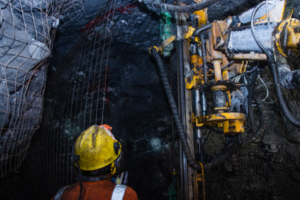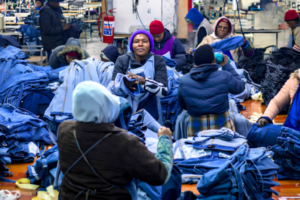

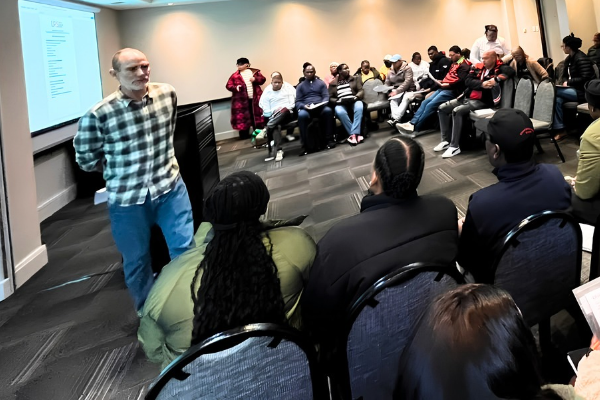
Photo: LRS Worker Leadership for Economic Justice workshop in Cape Town in August – session on collective bargaining and organising strategies for a changing world of work.
Inflation rose sharply in the second quarter of 2026. Prices that workers cannot avoid, including transport, electricity and petrol, rose fastest. The September 2026 issue of Bargaining Benchmarks provides negotiators with a series of benchmarks that will help them enter bargaining processes as informed role players.
Highlights
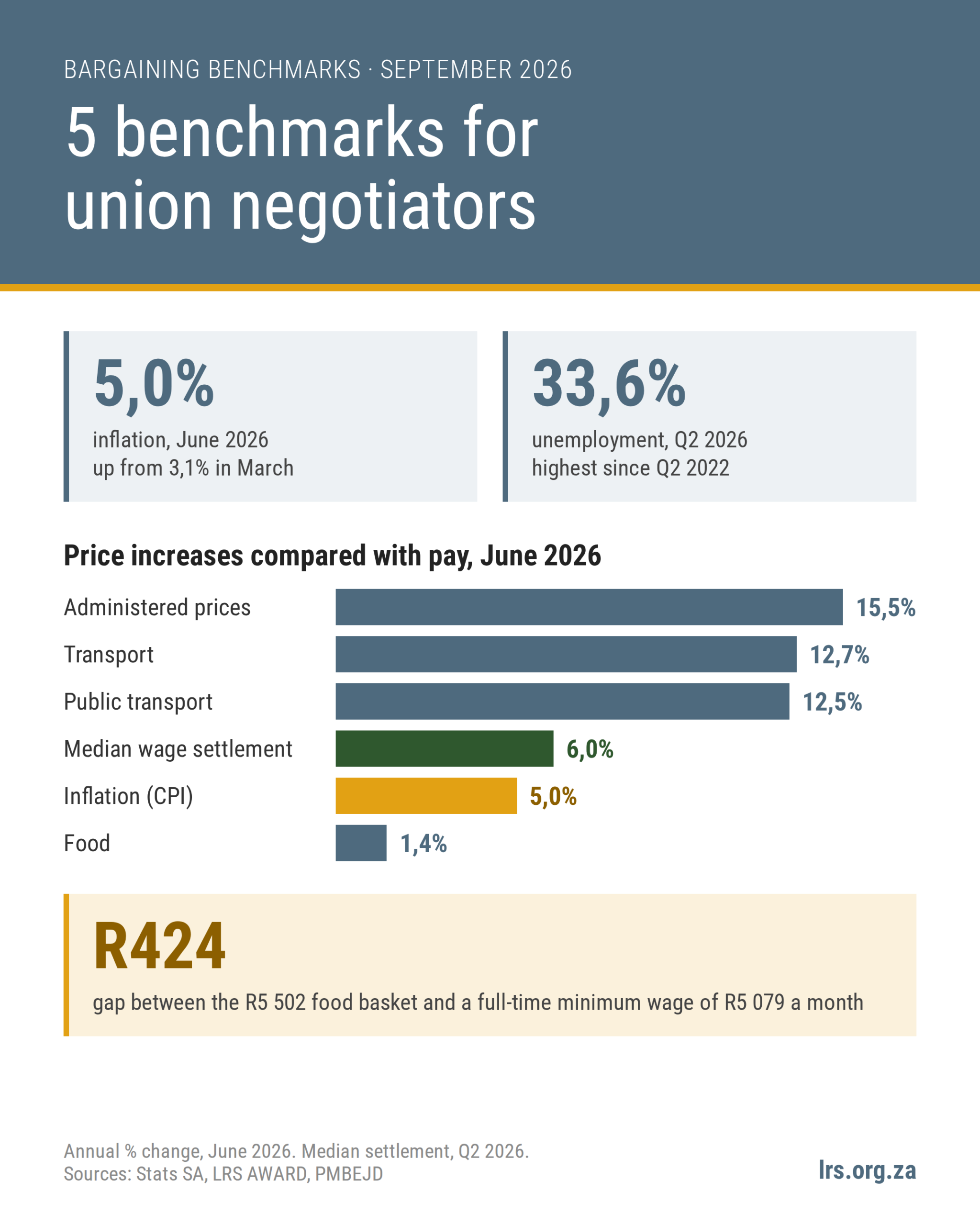
1. Inflation reached 5,0%
Annual inflation climbed from 3,1% in March to 4,0% in April, 4,5% in May and 5,0% in June. That is the highest rate since June 2024. With inflation at 5%, a 5% wage increase buys the same as last year’s wage. A smaller increase buys less.
2. Administered prices rose by 15,5%
Government sets or influences these prices, including electricity, petrol and school fees. They rose by 15,5% in June 2026, more than three times headline inflation. Transport rose by 12,7% and public transport by 12,5%. For workers who commute by taxi, train or bus, this cuts straight into the monthly wage.
3. Wage settlements were mostly 6%
The LRS Actual Wage Rates Database (AWARD) shows a median settlement of 6,0% in five of nine industries in Q2 2026. That is a real increase of 1,0 point above inflation. Electricity, gas and water settled highest at 7,0%. Agriculture and wholesale and retail settled at 5,0%, so workers there gained nothing in real terms. No settlement came close to the rise in transport or administered prices.
4. Unemployment rose to 33,6%
The official unemployment rate rose from 32,7% to 33,6% in Q2 2026, the highest since Q2 2022. Seven of ten industries lost jobs. The economy also shrank by 0,2%, ending six quarters of growth.
5. The food basket costs R424 more than the minimum wage
The PMBEJD household food basket cost R5 502 in June 2026. A full-time worker on the national minimum wage of R30,23 an hour earns R5 079 a month. That is R424 less than the cost of the food basket alone. Stats SA food inflation slowed to 1,4%, but the basket still rose by R174 between March and June.
The full September 2026 Bargaining Benchmarks covers food, transport and administered prices, inflation by income group, producer prices, employment by industry, GDP and wage settlements by industry, with charts for each. View Bargaining Benchmarks | September 2026 (PDF)
RELATED RESOURCES