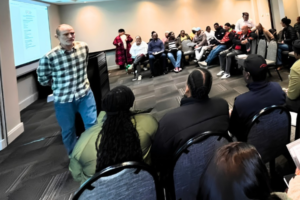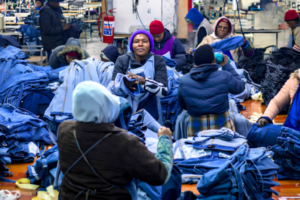


Care workers have mobilised around five demands for decent work and gender justice.
On 7 February, care workers will mark the first-ever Care Workers’ Day in South Africa.
Community Health Workers, Food Handlers and Early Childhood Development (ECD) Practitioners in the Social Sector of the Expanded Public Works Programme (EPWP) have united to celebrate the recognition, respect and rights of care workers.
Care Workers’ Day emerged from a Care Workers Convergence held in October 2025, where the three groups of EPWP care workers met to share experiences, build solidarity and establish a national care workers’ platform to advocate for decent work. The inaugural Care Workers’ Day marks the start of a public reckoning with how care work is valued and devalued in our society.
Why a Care Workers’ Day?
Care Workers’ Day is a moment for care workers, communities and government to recognise and celebrate the care work women perform daily to hold society together. It aims to recognise care work by publicly acknowledging its skills, commitment and impact. It is also an opportunity to amplify women’s voices and build solidarity across different forms of care work.
Care Workers’ Day creates space for care workers to speak about the pride they take in their work and the challenges they face — in the home and in government-mandated care work under the EPWP Social Sector, which employs mostly women in vital services such as early childhood development, community and home-based care, and school nutrition.
Care Workers’ Day honours the people who hold our communities together and reminds us of the value of care work. For this reason, care workers represented by the South African Care Workers Forum (SACWF), Food Handlers organised through a Gauteng Forum of Food Handlers, and Early Childhood Development practitioners supported by the South African Democratic Teachers’ Union (SADTU) united at a Care Workers Convergence in October 2025 and chose 7 February each year to celebrate the essential work of care workers across the country.
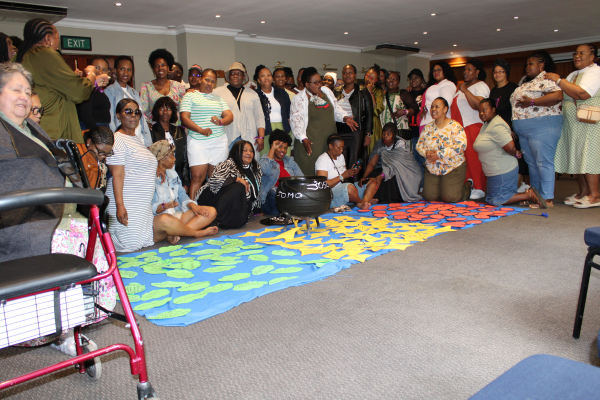
Participants at the Care Workers Convergence hosted by the LRS in partnership with the SACWF, SADTU and Food Handlers collective in October 2025.
Objectives of Care Workers’ Day
- Raise public awareness about the value of care work.
- Strengthen community support for care workers.
- Recognise and honour the contribution of Food Handlers, Community Health Workers and ECD practitioners as women and as workers.
- Make visible the challenges faced by care workers.
- Build confidence and leadership among care workers.
- Amplify care workers’ vision for decent work.
- Generate messages for the media.
The value of care work
Care work is the backbone of community well-being.
Food Handlers, Community Health Workers and Early Childhood Development practitioners provide health care, nutrition, early learning and emotional support that society relies on daily.
Care work is essential and skilled labour.
Care work requires skills, specialised knowledge and relational wisdom, which care workers use every day to respond to violence, distress and emotional trauma in communities.
The economy rests on care work.
Care work enables people to grow, learn and remain healthy enough to participate in society and the economy. ECD practitioners provide the foundational education and care young children need; communities stay healthy because Community Health Workers provide essential frontline health care; and learners have a survival lifeline because Food Handlers provide nutritious meals while offering support and guidance.
Care work is devalued because of patriarchal expectations.
Care work is treated as something women are naturally expected to do as obligation, destiny or unpaid labour, without deserving recognition, respect or payment. When society expects women to do essential work purely out of love, care work becomes invisible and taken for granted.
Decent work goals for care workers
These are the demands of Care workers within the Expanded Public Works Programme:
1. Dignified wages
We demand a living wage that reflects our skills, responsibilities and the social value of our work. A living wage recognises our contribution as essential workers, not “helpers” or “volunteers.”
We reject the use of “volunteer” status, which strips us of our rights, dignity and protection, while sustaining the functioning of the government’s public care system.
Graphic: Dignified wages
2. Formal, safe and dignified working conditions
We demand permanent employment with benefits, including UIF, sick leave and parental leave. Permanent employment is essential for gender equality, justice and the effective functioning of public services.
We demand safe workplaces. Community Health Workers lack protective equipment and safety protocols and experience violence, harassment and abuse. Food Handlers often work in makeshift kitchens without proper flooring, ventilation, storage or hygiene tools. Many ECD centres are overcrowded and located in unsafe buildings.
3. Recognition and professional respect
We demand correct and formal job titles within government department organograms. Accurate job titles change how care work is valued, paid and protected. Recognition promotes decent work.
Graphic: Recognition and professional respect
4. Training, career pathways and professional development
We demand access to accredited training and clear progression routes. Proper training can be a pathway to decent work, professional status and long-term economic security.
Graphic: Training, career pathways and professional development
5. Representation in policy design and decision making
We demand representation in policy design and decision-making. Care workers understand what communities need, where systems fail, and what would make services safe, dignified and effective. Policies made without us are out of touch, impractical and harmful.
Graphic: Representation in policy design and decision making
How will we mark Care Workers’ Day?

The Three-Legged Pot of Care Poster is an advocacy tool created by care workers.
The Care Workers’ Day poster is our unifying, educational and mobilising tool for strengthening the power, visibility, voice and solidarity of ECD practitioners, Food Handlers and Community Health Workers.
Care Workers’ Day Poster: JPG format | print PDF
We have displayed the poster in our centres, clinics, schools and communities as a symbol of pride and recognition.
We are using the poster to ignite discussion:
- The silhouette of a head filled with images of care workers shows how they carry the community in their minds and hearts, thinking and organising together. Inside the silhouette are figures representing a health worker, a food handler and an early childhood educator. Behind them stands a crowd of people raising fists and placards, connecting care work with social mobilisation.
- We are using a three-legged pot as an African symbol of nourishment, collective work and shared responsibility. The steam with the figures of care workers rising from the pot symbolises the heat, energy and nourishment that sustains our society. Without the fire to cook the pot, i.e. the work of care workers, nothing in society cooks, grows or works.
- Purple, the dominant colour, represents feminist struggle, dignity and unity. The orange and yellow tones inside the silhouette give a sense of warmth and care associated with one aspect of what care workers offer society.
- We will display the tools of our trade, including wooden cooking spoons, masks and sanitisers, and notebooks, pens and crayons, as visual statements about the skill, expertise, responsibility and societal value of care work. Our tools of trade make our work concrete and impossible to ignore.
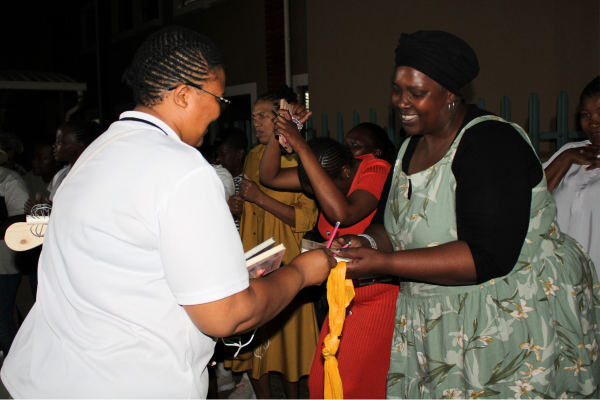
Care workers gifted each other their tools of the trade at the Care Workers Convergence held in October in Johannesburg.
- At 13:00, care workers across the country will share a collective ritual by reading a poem simultaneously, transforming local Care Workers’ Day activities into a coordinated national movement of collective identity and power.
Care Workers’ Day is part of our broader decent work initiative aiming to transform public care work programmes in South Africa.