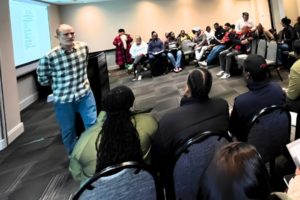
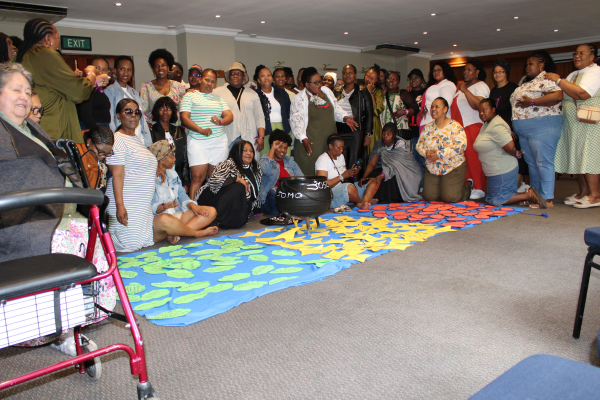
In early October, sixty care workers gathered around a three-legged iron pot resting on stones. They were Food Handlers, Community Health Workers, and Early Childhood Educators – the women who sustain the social sector of the Expanded Public Works Programme.
They were participants at the Care Workers Convergence, a festival of stories hosted by the Labour Research Service (LRS) in partnership with the South African Care Workers Forum, the South African Democratic Teachers’ Union, and a Food Handlers collective in Johannesburg.
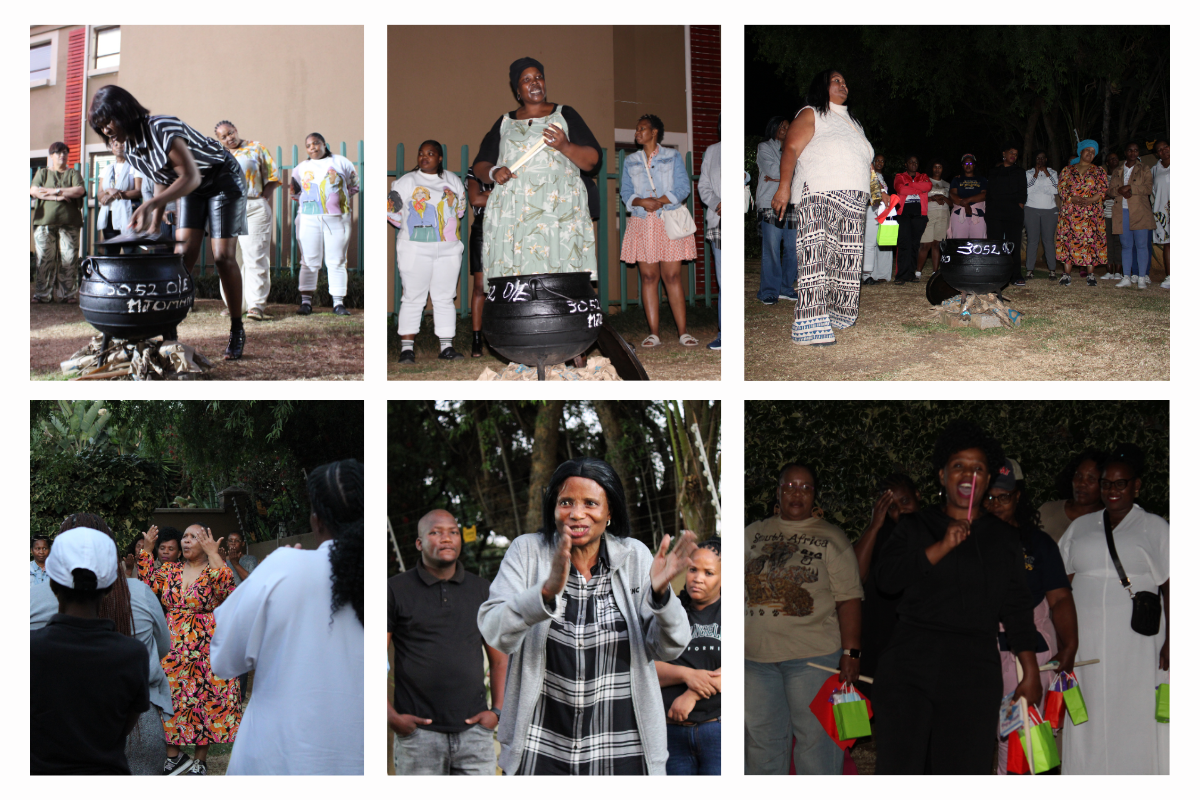
Three women stepped forward, each offering a gift that represented her sector: a wooden spoon, a care pack, and a pencil with a notebook. Around the pot, nutrition, healing, and the shaping of minds converged – each leg carrying many stories, each story carrying the weight of care and pride.
Using a traditional pot as a symbol of sustenance and community, the ritual was called “tending the pot of care.”
Guided by the Head, Heart, and Feet framework, the convergence was a space for listening, healing, and collective imagining, a space where women could see themselves as one body of care. It was also a step toward building a national care workers’ platform uniting the three groups in advocating for dignity, decent work, and transformation of care programmes within the Expanded Public Works Programme.
The engine of society
Women make up more than 80% of the thousands of workers in South Africa’s public care programmes administered by the departments of basic education and health, reflecting a global reality in which women perform nearly three-quarters of all unpaid or underpaid care work, contributing an estimated $11 trillion (R192 trillion) in value annually.
“The closer you are to care, the less valued you are.”
Through storytelling, care workers transformed scattered hardships into shared understanding and built a collective body of knowledge and evidence to advocate for change.
The convergence asked: Who cares for the carers? The question surfaced repeatedly in stories of exhaustion, pride, laughter, and tears.
The sky as a shared canvas
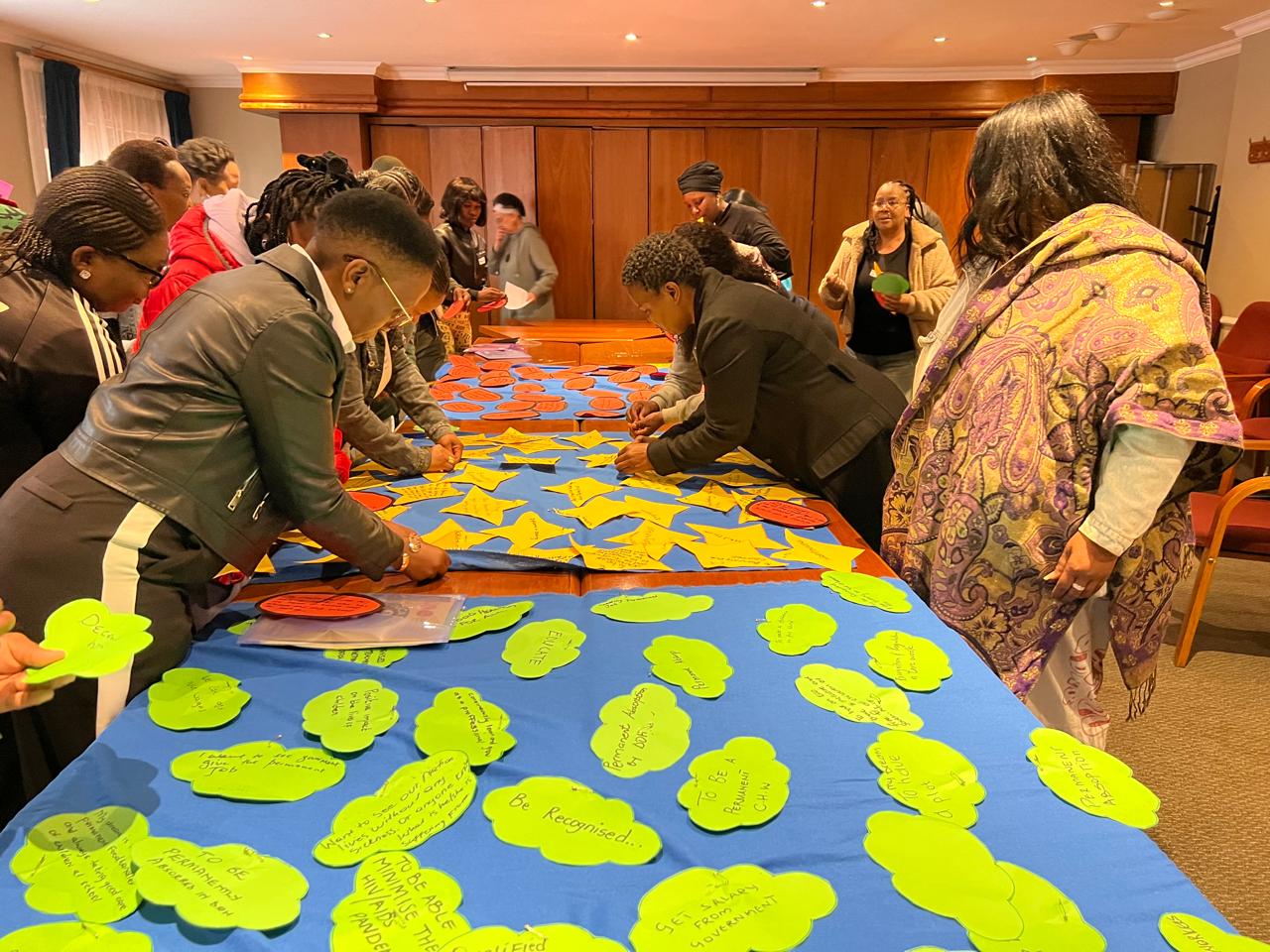
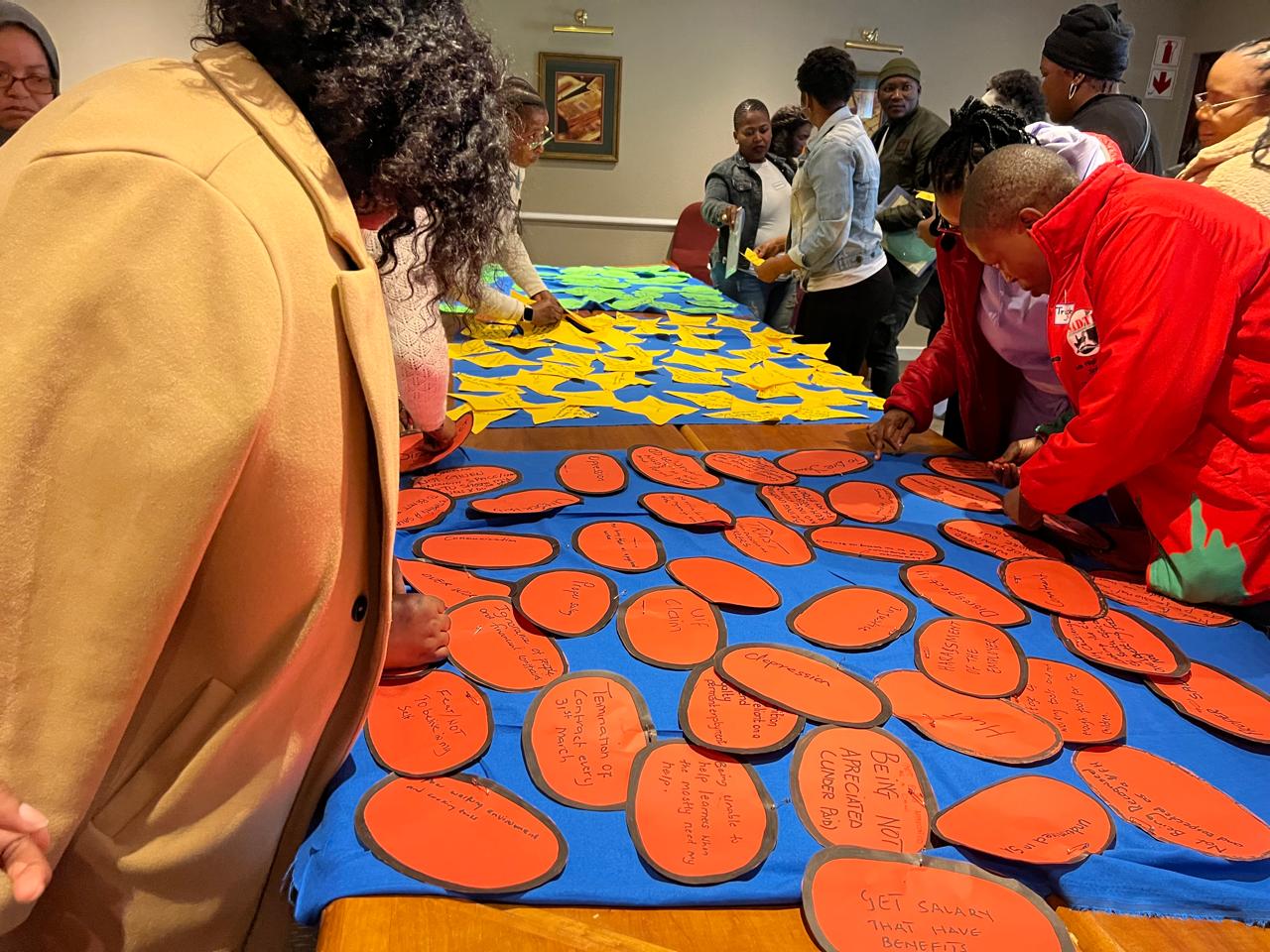
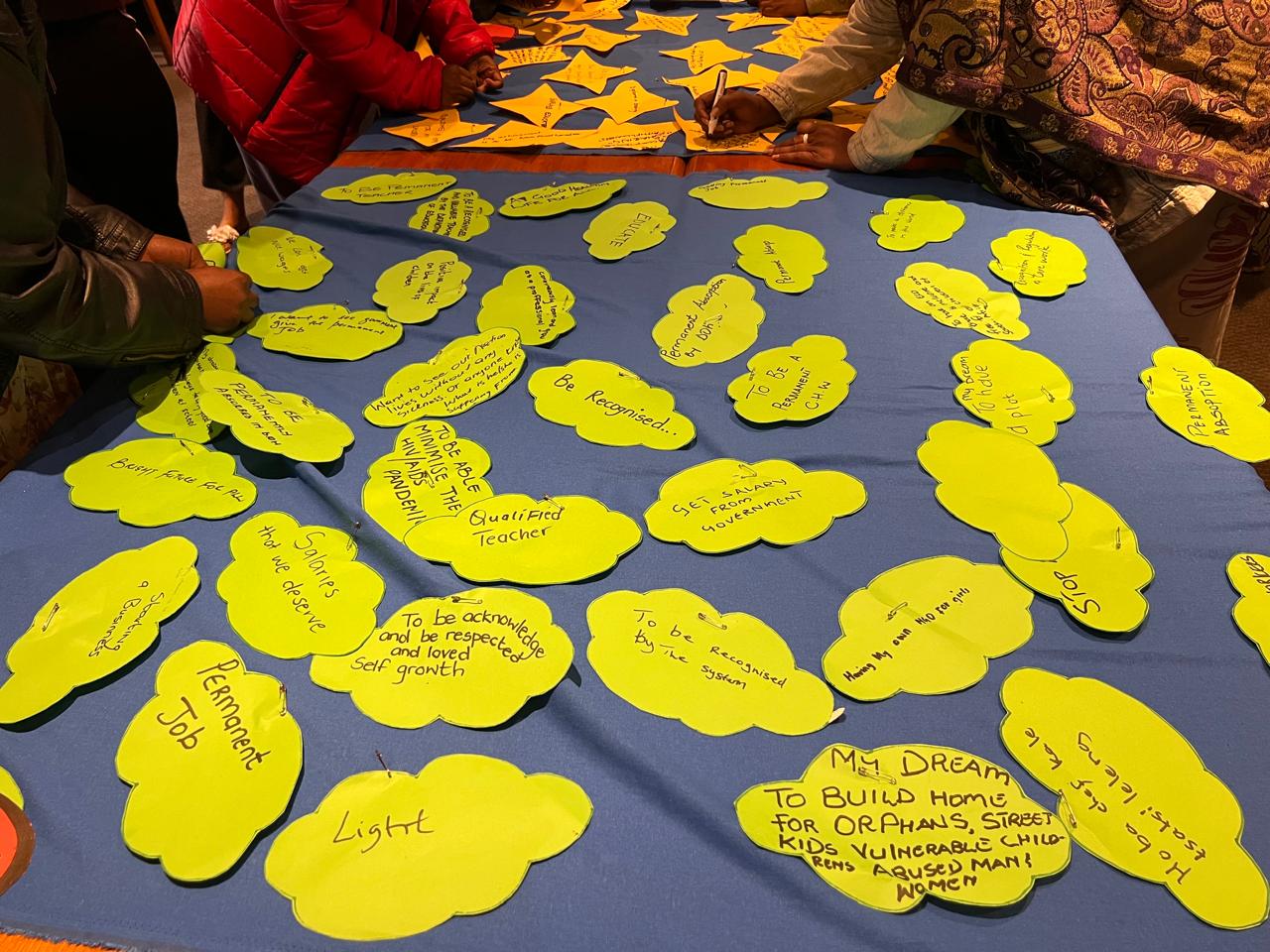
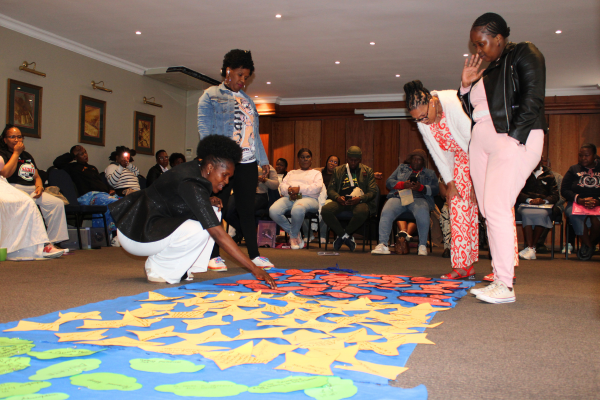
In the “sky as a shared canvas”activity, a large blue cloth represented the sky. Care workers mapped their realities: clouds for dreams, stars for achievements, and black holes for challenges.
“We are forever treading the line between our hopes and dreams and the black hole of our fears.”
“We all dream of being recognised and valued, and achieving success. Our dreams are the same, which means we are all connected.”
“As long as humans exist, care will be needed. I say to myself, I am a voice of the voiceless. Anyone thinking ahead should recognise and value care work. If we get a seat at the table, our skills and impact will speak for us.”
“Even though I work under these circumstances, even if the government does not want to pay us, we have skills that can never be taken away.”
“Our achievements benefit the whole community and make us proud. We have come together in one voice, and it’s the biggest achievement.”
“No one recognises us, no one sees us, no one values our work. But tomorrow we wake up with a smile for the kids. This is the true definition of ‘imbokodo’. We are strong.”
“I am afraid to die young. I think dying comes in many ways in the lives that we live. As black women, we die many deaths.”
A participant offered a vivid interpretation of the shared sky through the analogy of a ‘robot’ (traffic light) to show the cyclical nature of a care worker’s struggle:
“I look at the canvas and I see a robot. Everyone starts at the red, at home, without a job, in that dark space where you start thinking, I need to look for work. You move towards the green, and you are dreaming of skills, money, and stability. You start knocking on doors, and when one finally opens, you feel you have arrived. You have made it into the ECD or community health sector, or as a Food Handler. But even when you get there, the colours still matter. You realise the green light does not remain green. You have achieved a wage and a skill. But it’s not enough, and you start to see the cracks. You question the harassment, the disrespect, the low pay. You ask, Why am I not valued for the impact I make? And this provokes you to dream again, to study, to knock on new doors, to stand up and protest the unfairness you face. So we keep evolving. Whatever was once the dream becomes the starting point for another dream. Even finding that ‘unworthy’ job is an achievement, because it means we have moved, we have grown. Today, I’m delighted about my small achievement. And I ask myself, can I grow it into something bigger?”
Sharing our stories
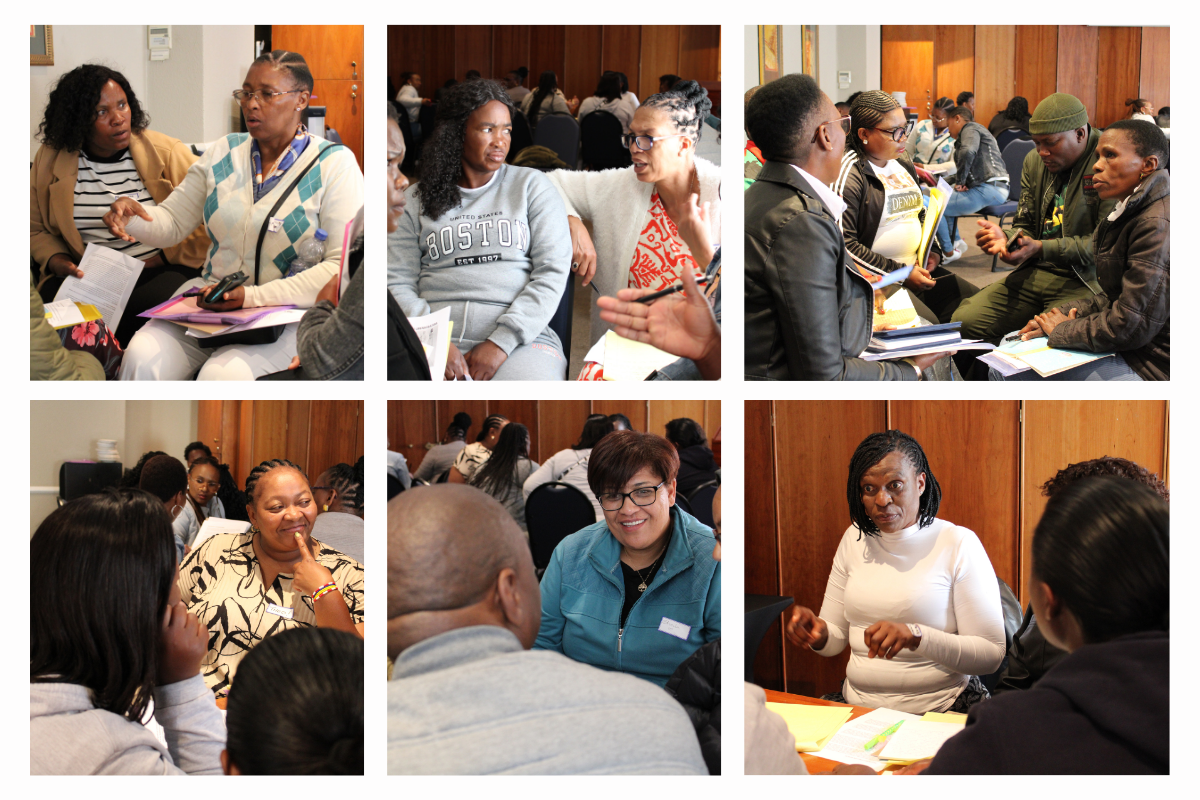
After weeks of writing their personal stories with LRS support, participants shared them in story circles and received feedback. These stories are one of the ways the care workers are voicing their struggles and insights as workers, activists, mothers and breadwinners to generate solutions and evidence for advocacy.
Heart
ECD educators arrived carrying their own burdens. Hearing the realities of Food Handlers and Community Health Workers, from exposure to infectious diseases without personal protective equipment, to feeding children with expired food or working without pay, shifted their perspective.
One educator confessed to feeling “ashamed” for not knowing the depth of the struggles of the other two legs of the pot of care. Another said, “In comparison to what they are going through, I count my blessings today.”
The comparisons did not diminish their own challenges but instead helped them locate themselves within the broader context of public care work characterised by undervaluing, precarity, and gendered neglect.
A food handler spoke of cooking soft porridge “with love and tears in my eyes.” A Community Health Worker described caring for entire households living with HIV and TB, then returning home with no counselling or rest:
“Even though I lack the same healthcare access I ensure for others, I know I am saving lives. Being here with comrades is a rare opportunity; I feel cared for.”
Despite having so little and going through so much, care workers continue to show up because, as one said, “We see the needs of children. We see the needs of other people.”
Head
The very programmes that depend on women’s labour are designed to devalue and disempower them. The testimonies of care workers expose governance failures within the Expanded Public Works Programme, revealing how austerity and gendered precarity intersect to keep women in low-paid, insecure work.
The care continuum: The child connects all three sectors, forming an unbroken line of care — from Community Health Workers supporting pregnant mothers, to ECD educators shaping minds, to Food Handlers providing nourishment for children to thrive. Despite this interdependence, policy frameworks treat each group in isolation, fragmenting the care system and weakening its collective strength. Recognising this continuum is key to valuing care as essential social and economic infrastructure, and not as peripheral or voluntary labour.
Governance gaps and institutional disrespect: Community Health Workers operate at the most intimate and essential level of the health system, yet their role is routinely dismissed within the public health hierarchy.
“We do the home visits and bring patients to the hospital system, but nurses disrespect our testing and data.”
This lack of institutional respect mirrors a wider governance failure. Community Health Workers, contracted through NGOs under a health tender system, fall outside any unified framework of accountability. Their employment conditions depend on NGO contracts rather than state oversight, leading to labour rights violations.
Structural obstacles and austerity practices: The Expanded Public Works Programme’s short-term contract model, presented as a job-creation scheme, has become a tool of containment rather than empowerment. Care workers describe being locked into temporary contracts that block career progression and prevent access to permanent posts, pensions, or benefits like UIF. One qualified teacher, working under a care worker contract, was denied an interview for a permanent teaching post because she already received a stipend under the EPWP. Food Handlers face an uphill battle claiming UIF, while Community Health Workers are denied pay for extended periods.
“It’s perfect austerity, with the greatest disrespect at its core.”
The barriers turn upskilling into a statistical exercise. The government uses training primarily to inflate employment figures rather than create pathways to professional recognition or decent work. When workers fall ill, they are easily replaced, and decades of service end in dispossession.
Exploitation and resource deficits: Food Handlers operate with severe resource shortages and undefined job roles. Their work extends beyond meal preparation to cleaning classrooms and caring for young children, tasks that are not compensated. Corruption at the school level compounds the exploitation, as funds meant for kitchen equipment are routinely mismanaged.
“I have experienced all three legs of the pot: I was in food handling (waitressing), as a Community Health Worker, and now I am an ECD educator. It is difficult to tell people I have been stuck in a dark hole where I have been exploited since my 20s. In this season, you do not qualify for a bond or medical aid; you are renting, while having children and starting a family. After the age of 35, you are not recognised and are unemployable. You become stuck. Your dreams and achievements are limited because of the exploitation and austerity of our government.”
Gender, power, and the devaluation of care: Undervaluation is embedded in the very structure of public care provision. The state’s reliance on feminised, temporary, and poorly governed labour keeps the care economy functioning while externalising its costs onto women’s bodies, time, and emotions. In this sense, care workers’ demand for decent work challenges a system that treats women’s labour as an infinite, renewable, and cheap resource sustaining the nation.
Feet
The care workers see their struggle as a struggle for decent work and a fight for their human rights and dignity. The participants committed to act in their organisations, workplaces, and communities. They also have strategies and actions for their solidarity: A national care workers platform to demand decent work and transformation of public care programmes, and a care worker’s day on February 7th.
Since the convergence, the South African Care Workers Forum has taken several actions, including spreading the message of a national care workers’ platform and Care Workers’ Day among its members. Community Health Workers have reached out to Food Handlers and Early Childhood Development educators in their local areas, with some groups convening formal meetings to share their experiences of the convergence.
OUR CARE STORIES
My story of the pencil
I am a Food Handler, and I deserve dignity and rights
My journey as a care worker and the reality of Community Health Workers
RELATED ARTICLE
7 February is the inaugural Care Workers’ Day