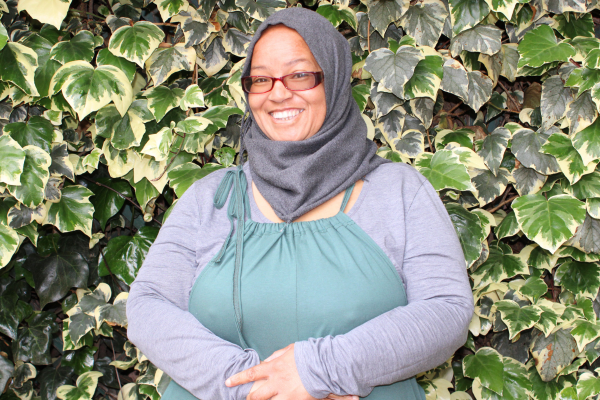
Salaama Abrahams, Organiser at the South African Care Workers Forum, is among the Community Health Workers who have united with Food Handlers and ECD Practitioners to demand decent work within the Extended Public Works Programme.
I started working in healthcare in 2011, beginning with home-based care before gaining experience in old age homes. I provided compassionate care to families, built trust, and meaningful relationships. The work was deeply personal and rewarding.
In 2019, I began working with an NGO as a Community Health Worker, which opened my eyes to the harsh realities faced by workers in the public health system. As a private carer, I had some independence: I negotiated my pay and schedule directly with families or facilities. Being a Community Health Worker is different and complicated. We are overworked and underpaid, often possessing more knowledge and practical skills than some team leaders and even management.Yet we are not recognised for our contribution.
Community Health Workers have no benefits, no clear employer, and no policies to guide our work. Everything operates loosely under the Basic Conditions of Employment Act, which leaves many gaps in protection. In the past, UIF deductions were sometimes taken from our salaries but never paid to the Department of Employment and Labour. NGOs and the Department of Health deny any responsibility. I was now part of a system where exploitation is normalised.
During my first week on the job, I noticed a colleague with a wet nursing top. She explained that there was no private space to express herself, and more shocking, that maternity leave lasted only one month. This was a violation of rights under the Basic Conditions of Employment Act. Then I discovered my own UIF deductions weren’t being paid over to the labour department. These were red flags showing a deep lack of accountability and the vulnerability of care workers. The more time I spent in the field, the clearer it became that the system is designed to exploit Community Health Workers.
The seed of activism
Many Community Health Workers were too afraid to speak up because they didn’t know their rights or feared losing their jobs. The culture of silence sustained the exploitation. Something stirred inside me, and I began asking questions and raising issues, for myself, for every woman and family who depends on this work, for Community Health Workers who had been silenced. These moments were the seeds of my activism. What began as a job quickly became a calling to fight for dignity and justice, through advocacy groups, unions, and community organisations.
The struggle of Community Health Workers
One of our biggest struggles was how our training and hard work were constantly undermined. We attended countless programmes, including HIV and TB care, breastfeeding education, alcohol reduction, palliative care, auxiliary social work, but the very Department that trained us often refused to recognise those trainings. Only half of the participants received certificates; others were given attendance certificates after an intensive programme or had their training abruptly cut short. Those who questioned were labelled troublemakers and risked losing contract renewals, a tactic to keep us silent and compliant.
There were uniform allocations that many of us never received. Even when we looked the part, we weren’t treated with the professionalism or respect afforded to nurses.
Meanwhile, our scope of work continued to grow. Community Health Workers are the heart of the healthcare system. We clean wounds, care for the sick and elderly, assist stroke patients, conduct foot screenings, support TB and HIV treatment, provide antenatal and postnatal care, and address mental health. Our work extends to schools, crèches, elderly clubs, and fitness groups. We are social workers, nurses, educators, and frontline defenders of a system that often fails the very people it’s meant to serve, yet we remain invisible in national budgets and policies.
The foot soldiers of the pandemic
Covid-19 took a heavy toll on us. We were out on the streets when no one else wanted to be near the sick. We knocked on doors, delivered medication, and checked on vulnerable patients. Many of us contracted Covid. Yet when it came to recognition, there was no danger pay or extra compensation — registered nurses working inside facilities received special allowances and remuneration. We were deemed worthy enough to be sent into the most dangerous situations, but not considered important enough to be valued like the rest of the healthcare team.
Despite this, some moments reminded us why we do what we do. The silent kiss on the hand from a grateful patient. The whispered prayer from an elderly person wishing us safety on the road. The warm smile and heartfelt “thank you” when we dropped off medication. These small gestures made our work meaningful, even when the system failed to see us.
Breaking the silence
Something changed in us after Covid. We could no longer remain silent. We began fighting not just for ourselves, but for every care worker who will come after us. We joined unions, formed healthcare forums, and connected with organisations that could amplify our struggles.
"When you are silent about your pain, they will kill you and say you enjoyed it."
– Zora Neale Hurston
For years, Community Health Workers had been scattered across different areas, clinics, NGOs, and regions — each of us struggling quietly, silenced by fear of losing our jobs or being targeted. I remember the day I decided I could no longer stay silent. It was during an NGO meeting discussing the permanent absorption of Community Health Workers. At first, there was excitement — Finally, they see us. However, as the meeting progressed, fear began to creep in. What does absorption really mean? Will they cut our stipends? Will everyone be included? No one had answers. In that moment, I realised how deep our fear ran — and that we needed to unite.
I began reaching out informally – a quick chat during tea breaks or a message after a training session. Slowly, I built relationships with Community Health Workers in other areas. Our stories were unique, but our struggles were the same. Still, breaking the silence wasn’t easy. Some colleagues would whisper when discussing issues, glancing around to make sure no one overheard. Others didn’t trust the process. They had seen too many leaders rise only to sell out or disappear. Before we could fight the system, we had to heal our own fear and mistrust.
We created safe spaces, sometimes formal meetings, sometimes just a few of us at someone’s house. It felt like planting seeds in dry soil at first. But little by little, more Community Health Workers started showing up, more voices joined, and more people began to believe that change was possible. Before long, we were a movement, not isolated groups.
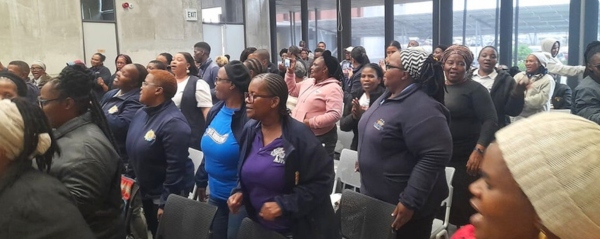
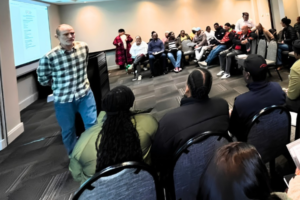
Community Health Workers Dialogue in Khayelitsha in May. Photo by Misheck Makora/Daily Sun.
Facing the flak
With growth came resistance. Supervisors questioned why we were “gathering so much.” Some threatened non-renewal of contracts; others spread lies to create divisions among us. There were moments I felt like walking away. But whenever I thought about giving up, I remembered why we started.
At first, I didn’t see myself as a leader. I was just a Community Health Worker tired of disrespect and ready for change. But over time I found myself speaking up more, and on behalf of others — gathering facts when rumours spread, sitting with colleagues who felt like giving up, reminding them why we started. Over time, I became known as the voice of the voiceless.
But being that voice came with a price. Not everyone appreciated what I was doing, from supervisors to colleagues. There were days when I went home emotionally drained, questioning if it was worth it.
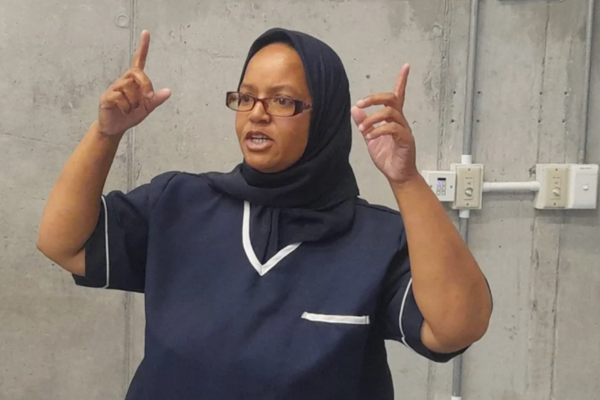
Salaama Abrahams addressing Community Health Workers. Photo by Misheck Makora
A movement is born
By the time we officially began organising on a larger scale, we were no longer just individuals. We were a network—a collective force that stretched across areas, regions, and provinces. We are united by a shared vision of an economy that values carers.
To the Department of Health, we say: If you truly want a strong, accessible, and preventative healthcare system, you must see us, hear us, and value us. This is not too much to ask.
RELATED ARTICLES
Community Health Workers: “Nothing about us without us”
How Community Health Workers secured payment of delayed stipends