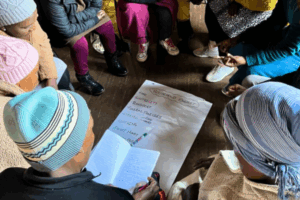
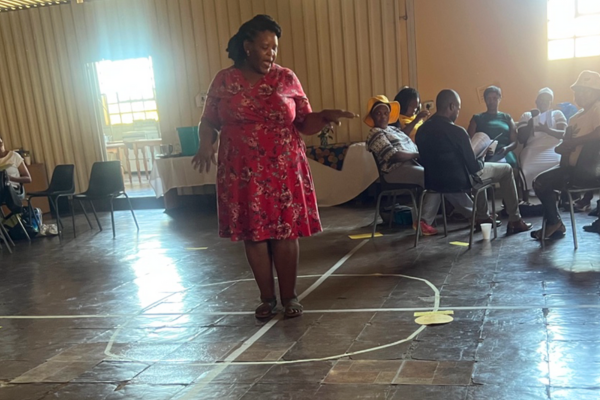
In October, a woman named Babalwa stood in a circle drawn on the floor. Around her, four quadrants mapped out the opportunities and barriers to achieving decent work as a Food Handler in the National School Nutrition Programme (NSNP).
Outside the room, she is seen as a volunteer, a mother who helps out, someone whose labour is always available but is not recognised. Inside the circle, she was redefining her identity.
“The norm that needs to change is that as a Food Handler, I might be a mother, yes, I am a carer, but I am a worker.”
— Babalwa, Food Handler
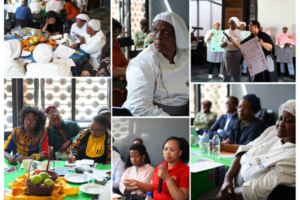
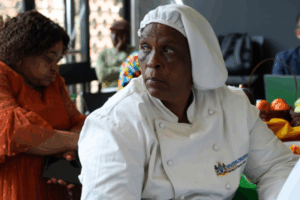
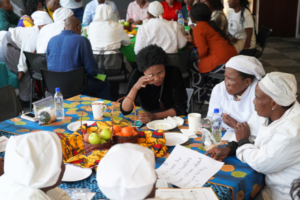
Babalwa was speaking at the third “Thinking Laboratory”, part of a series of workshops developed by the Labour Research Service (LRS) to help Food Handlers interrogate the systemic devaluation of their labour and organise for decent work.
The first laboratory explored what the national budget reveals about the government’s attitude to care work. The second laboratory examined the politics of public budgeting, where care is peripheral, informal and infinitely flexible, something women should absorb at their own cost.
The third brought everything together, using the Gender at Work Framework to map the power and action required to take forward the struggle of Food Handlers.
Food handlers take stock of the struggles and negotiations for Decent Work
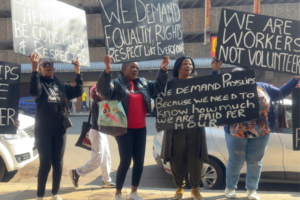
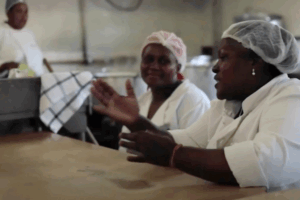
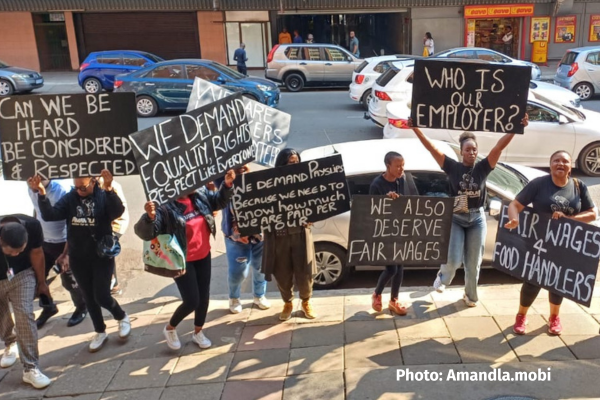
The Food Handlers arrived excited after months of organising: mobilising a petition through Amandla.mobi, demonstrating, and working with LRS and lawyers to compel the Department of Employment and Labour to account for their conditions of employment. The department issued a formal response confirming what Food Handlers already knew.
- Food Handlers are contracted workers, not volunteers. The term “volunteer” must be removed from their job titles.
- Food Handlers must receive written particulars/payslips detailing hourly pay, hours worked and tasks completed.
- They are entitled to sick leave, at least one paid sick day per month, up to 12 days per year under the Extended Public Works Programme Ministerial Determination.
- School principals are the legal employers responsible for implementing the programme at the school level.
- The Department of Basic Education must ensure equal access to training and clear communication about the programme.
- The Department can also motivate Food Handlers to earn the national minimum wage at NEDLAC, the statutory social dialogue body.
The law recognises Food Handlers as workers, yet their ongoing exclusion and exploitation highlight a system where policy is ignored and their visibility is suppressed intentionally. The disconnect made the Gender at Work Framework even more important.
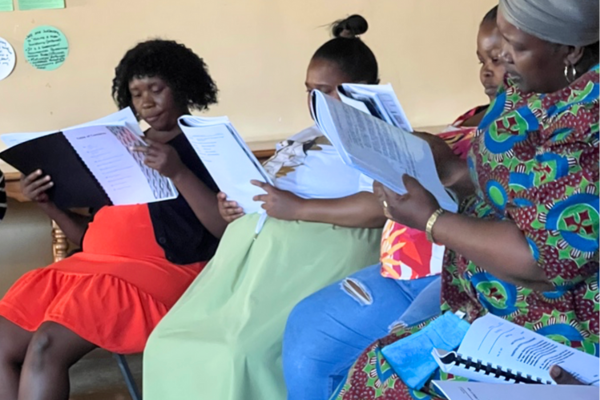
Food Handlers exposed how the Department created a “fraudulent contract” not aligned with EPWP Ministerial Determination.
Taking forward the struggle using the Gender at Work Analytical framework
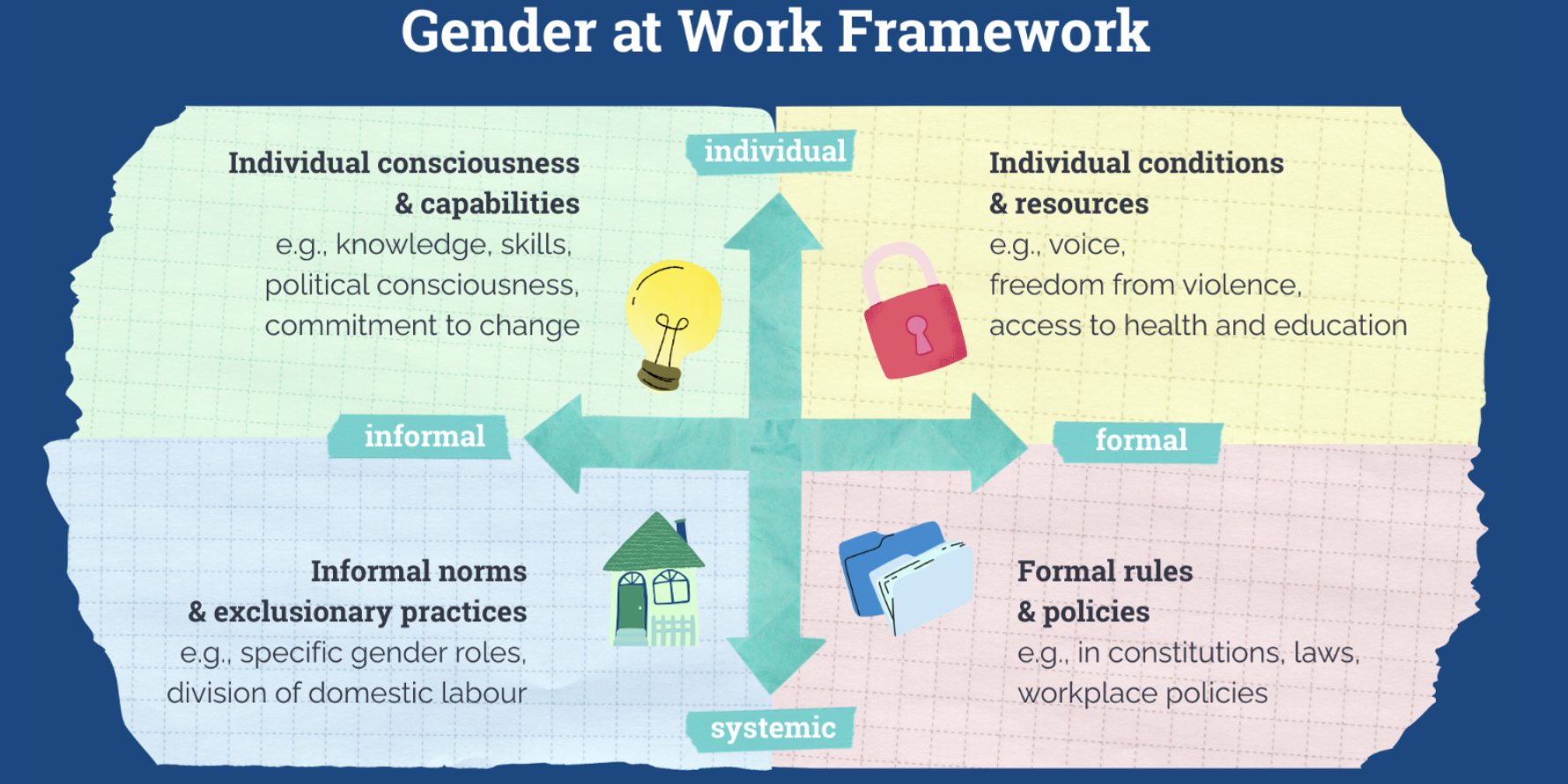
The Gender at Work Framework is a tool for understanding where change is needed, whether it is in personal attitudes, workplace policies, or societal norms. The framework is drawn as a box divided into four smaller boxes, or quadrants. The four quadrants address all aspects of a problem, as change is necessary in every area for a system to transform.
Food Handlers were already familiar with the framework. But this was the first time the exercise required a person to stand at a vantage point – a circle placed at the intersection of the four quadrants. The innovation offered several possibilities.
It transformed the framework from an abstract diagram into a lived experience, building on our role-play methodology [link] to strengthen the idea that learning is an active, participatory, and engaging process.
Standing in the quadrants, the body becomes part of the analysis. Standing in the circle, Food Handlers experience the swirling power dynamics of all four quadrants, where power operates and interacts. The result is consciousness that their actions can influence multiple dimensions simultaneously.
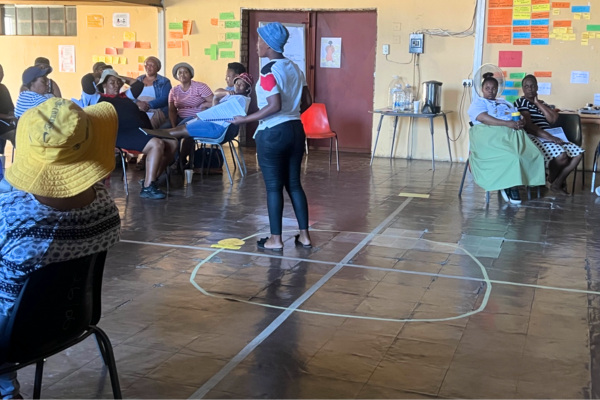
Food Handlers stood in all four quadrants, claiming their agency and power to create change across all domains.
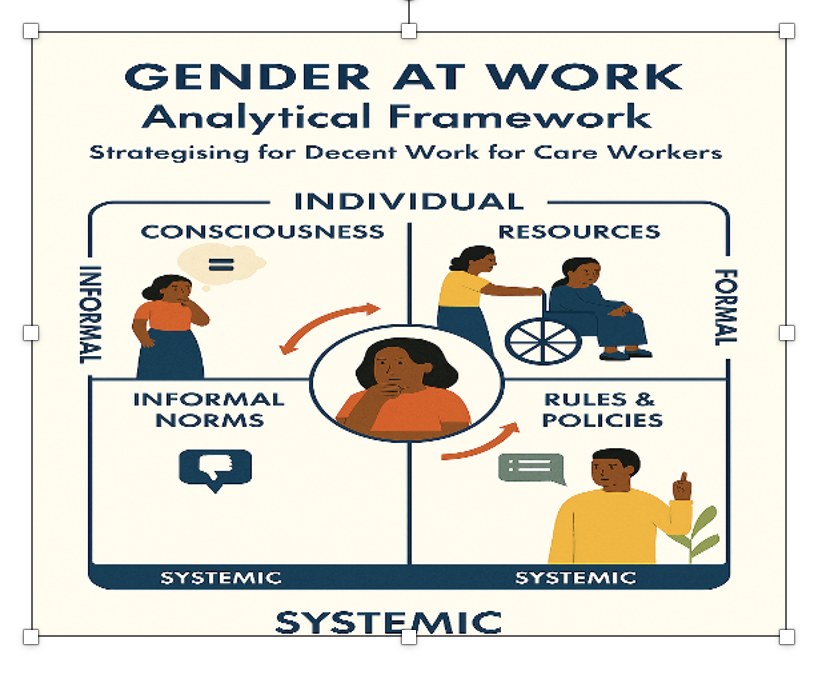
The circle represents wholeness and inclusion, and it also symbolises the ‘centre of power’, challenging the persistent narrative that makes Food Handlers invisible.
Walking the quadrants
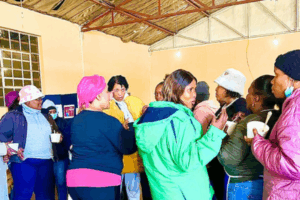
One by one, Food Handlers stepped into the circle to map the changes needed to win their demands.
Babalwa tackled the issue of social norms.
“There is a norm that I am not a worker. I am recruited through my child. I have no sick leave - the school is saying, if you are busy trying to be a princess and want to get sick, who is going to cook for your child? The assumption is that the school is doing me a favour and my presence is conditional. The norm that refuses to see us as workers deserving of decent work must change. I might be a mother, and yes, I am a carer, but I am a worker.”
— Babalwa, Food Handler
The principals refuse to take their legal responsibility as employers. They see Food Handlers as an inconvenience, extra work, added problems, and someone else’s responsibility.
Zodwa focused on raising consciousness.
“We have these rights that the labour department confirmed. If we don't have awareness workshops and change people’s consciousness, we won’t be able to see the norms change. People see these rights as existing for traditional workers and not us.”
— Zodwa, Food Handler
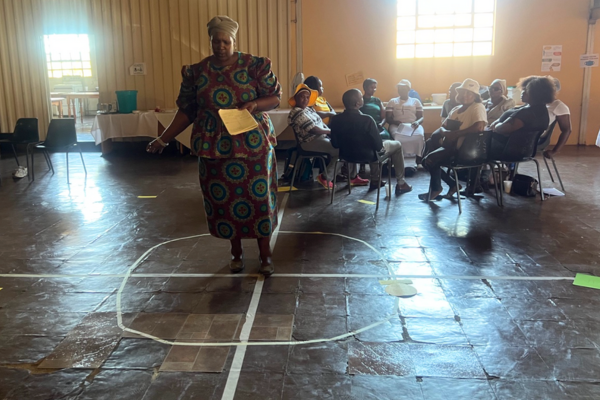
Standing in the centre made it possible to see more clearly that the framework process is not linear, and that their actions impacted all four quadrants. Food Handlers saw resources differently. Their voices, meetings and relationships are resources. The principal could become a resource in their struggle, but only after a shift in consciousness, social norms, and rules and policies.
A food handler used the principles as an example to illustrate how the final goal can serve as a valuable resource. To succeed, they need to confront the principal’s refusal to take responsibility for the Food Handlers.
The starting point is the consciousness-raising quadrant, and then social norms. It involves engaging food handlers from different areas to collectively identify the principal as the employer, despite the principal’s reluctance. The goal is to inform both the principal and the broader school community that food handlers know their rights under the Expanded Public Works Programme. Food handlers expect principals to fulfil their role as employers by ensuring that contracts clearly state the principal as the employer, which is the rules and policy quadrant.
Opportunities for taking forward the struggle for decent work
- Sustain pressure on the Department of Basic Education to enforce conditions of work as stipulated in the EPWP ministerial determination.
- Mass mobilisation of Food Handlers across the country.
- Start conversations about forming an institution to continue the group’s organising and advocacy. The Food Handler contract is for two years.
- Mobilise and plan for the Care Workers Day on the 7th of February.
RELATED ARTICLES
What does the national budget say about how the government values care work?
Care work and public budgets: A feminist inquiry
From “Volunteers” to Food Handlers: A step towards dignity in school kitchens