
The everyday violence against Community Health Workers

Kukhanya Mthimkulu

The everyday violence against Community Health Workers

Community Health Workers demand formal, safe and dignified work.

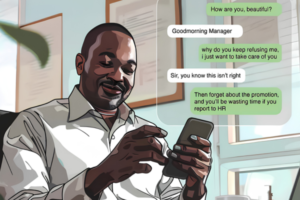
Quite a number of distressing accounts that come from Community Health Workers are about the brazen attacks they face in the very communities they are meant to serve. A majority of them are not provided with reliable or consistent transportation, which means that they often have to find their own ways to the homes they are assigned to visit. On these commutes they are exposed to significant risks. Many speak about being robbed while travelling to households, and even more frightening are the accounts of Community Health Workers being attacked by some of the people in the homes they have been called to assist. These are some of the most terrifying realities that Community Health Workers must navigate in the course of their work, and yet they are not even the most extreme scenarios that they encounter.

What makes these situations even more troubling is that many Community Health Workers do not have meaningful workplace or labour protections to fall back on. When incidents occur, they are often left to rely on their own resourcefulness to deal with the aftermath. There is very little institutional support in place to protect them or assist them when harm occurs. Their vulnerability is compounded by precarious employment conditions that leave them constantly balancing their safety against their ability to earn a living.

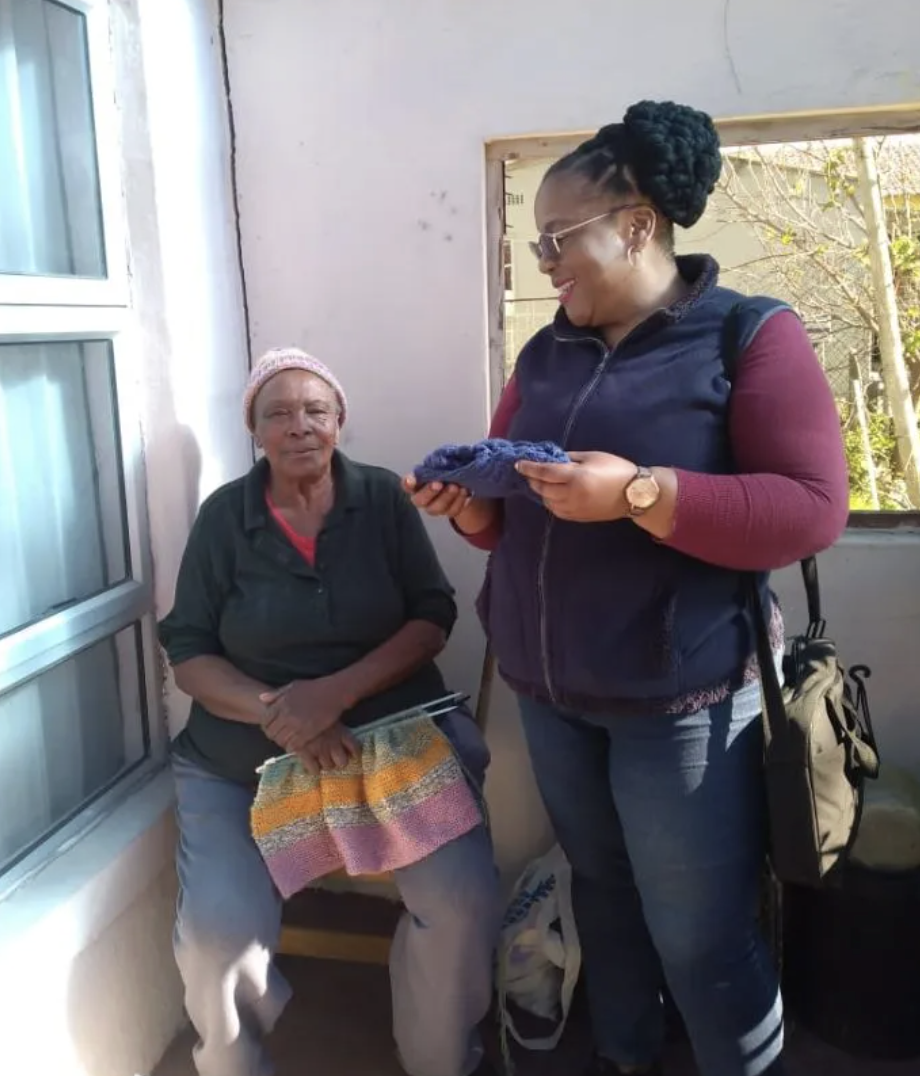
Nobuntu Mfengwana on a home visit with a patient in Mfuleni.

 Community Health Workers do not get adequate leave and are often told that if they do not come to work, they will not get paid. Already they are not paid adequately for the work that they do, and losing even a single day’s income would represent a significant financial setback. For many of them, that loss cannot simply be absorbed. Above this, they are also not provided with adequate counselling or structured opportunities for debriefing by their employers. The emotional weight of the work is therefore carried largely on their own shoulders, often affecting not only how they continue to perform their work but also how they move through their lives at home.

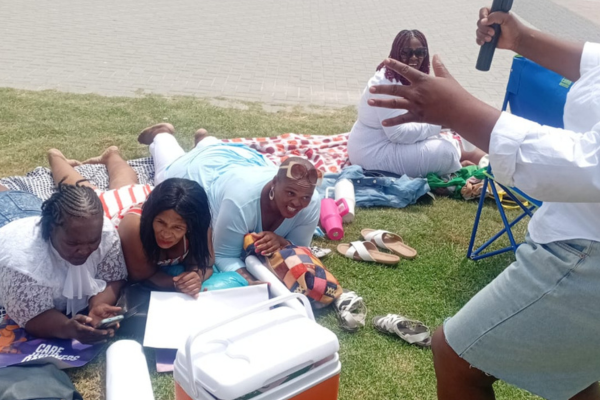
It was therefore particularly significant for many of the care workers to have dedicated spaces for counselling and debriefing during Care Workers Day. You could see it in the way many of them gathered together and held space for one another along the beach, sharing food, sitting together in quiet reflection, and creating moments of collective rest. The picnics and informal gatherings became more than just leisure; they created spaces for collective healing where workers could release some of the weight that they carry in their daily work. In those moments, they were able to gather strength in whatever ways felt meaningful to them before returning to their communities and continuing the work that is so often demanded of them.

Community Health Workers marked Care Workers’ Day with a beach picnic in Cape Town.

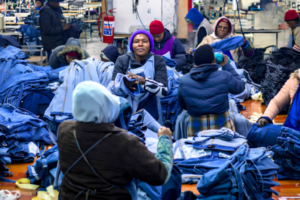
The brazen invisibility in the treatment of Community Health Workers is also revealed in the way they are sent into some of the most objectively dangerous communities without meaningful regard for their safety or wellbeing. Their labour is treated as disposable and replaceable, which is why so many of them continue to be excluded from stable and meaningful employment contracts. There is an underlying assumption that the work they perform is easily transferable, something that anyone could simply learn and perform without much difficulty. This assumption ignores the reality that their work requires skill, practice, patience, and a deep capacity for care that cannot easily be taught or replicated.

Community Health Workers possess a unique ability to connect with the communities they serve precisely because they often live within those communities themselves. This proximity allows them to understand the lived realities of the people they assist in ways that formal health institutions sometimes cannot. Yet this closeness should never translate into an entitlement to their labour. The fact that they are part of these communities does not mean that their work should be undervalued or taken for granted.

In reality, the Department of Health would face even greater pressure than it already does without the consistent support of Community Health Workers. They provide crucial access to healthcare for people who cannot always make it to clinics and hospitals, acting as a vital bridge between vulnerable households and the formal health system. If their work is truly appreciated, that recognition must be reflected in meaningful ways through secure contracts, fair compensation, and working conditions that acknowledge the value of what they do.

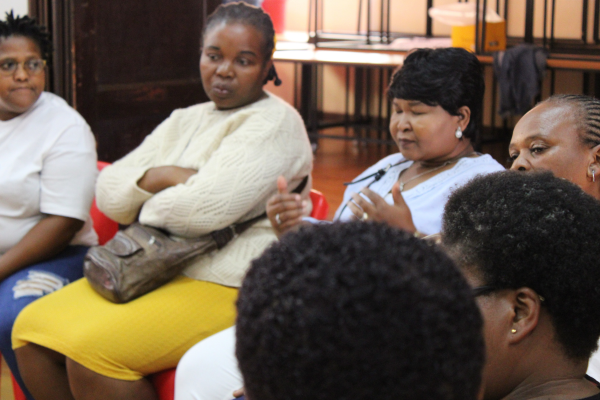
We cannot live in a society where skilled labour continues to be exploited to these degrees. Care Workers Day highlighted the importance of creating spaces where care workers can come together not only to rest and reflect, but also to strengthen the collective work of demanding access to fair labour practices. It is through these spaces that they are able to organise, share their experiences, and continue placing pressure on government, particularly the Department of Health, to come to the table with real and sustainable commitments.

Community Health Workers provide crucial access to healthcare for people who might otherwise remain unseen by the formal health system. That contribution must be recognised not only in words or commemorative days, but in tangible and lasting changes that honour the dignity of their labour.
Recent Posts

Essential Links

Essential Resources

Tags Cloud

Subscribe to receive our email updates

I am interested in: