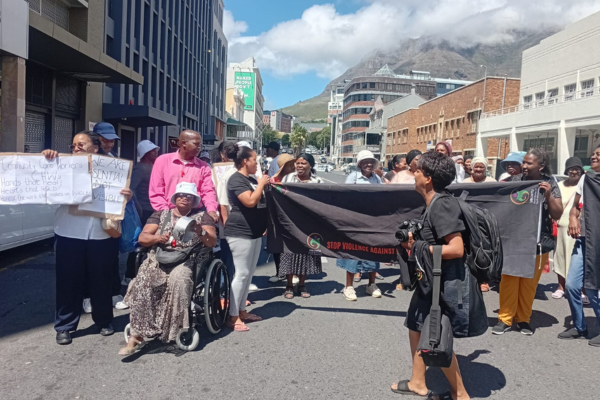
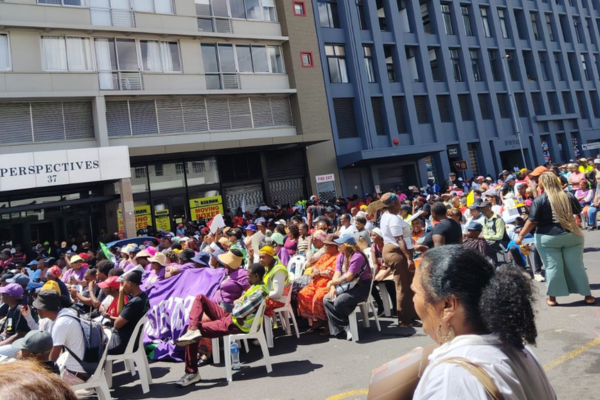
Community Health Workers protest outside parliament during the national budget speech.
The Finance Minister Enoch Godongwana delivered the national budget speech on February 25th, and I keep asking myself: what does a commitment actually mean when the province responsible for carrying it out simply refuses to?
On the morning of the budget speech, members of the South African Care Workers Forum (SACWF) – Western Cape stood outside Parliament alongside other civil society organisations to make a point the minister seemed unlikely to make for us. Community Health Workers in this province have been promised permanent employment through a high court order. We understand that the funding has been allocated. And yet the Western Cape continues to outsource the hiring of Community Health Workers through NGOs, while congratulating itself on a strengthened primary healthcare system.
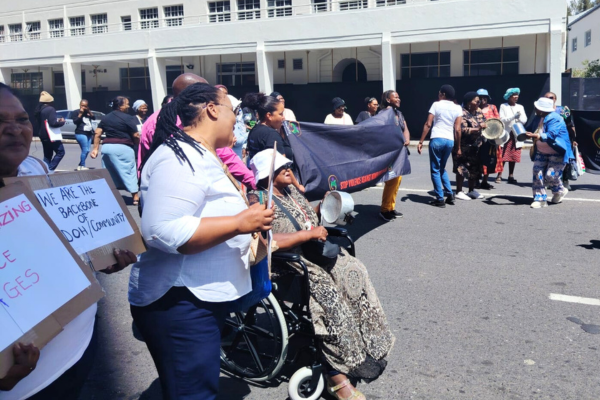
SACWF mobilised for the protest through provincial and district structures, WhatsApp networks, word of mouth, and coordination with civil society partners.
What absorption looks like for workers
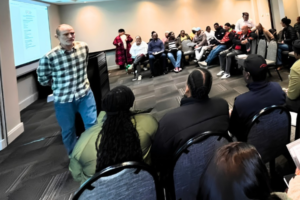
After the picket, I joined a SACWF online reflection space hosted by the LRS. I had expected to hear frustration, but not the scale of division that the absorption process has generated among Community Health Workers. Across provinces, absorption has produced a layered hierarchy of precarity. For example, there are lay counsellors on 12-month rolling contracts, Community Health Workers without a matric certificate waiting on a Recognition of Prior Learning process that moves at its own pace, and those classified as “permanently employed” but still without official appointment letters. The word “permanent” has been stretched so thin.
We named this condition fragmentation. The inconsistencies in provincial health departments have seeded suspicion, resentment and a corrosive sense that some workers are valued more than others. Older Community Health Workers who built their careers without completing matric feel their decades of frontline service are being quietly erased by a qualification threshold that arrived long after the work was done. This is discrimination against the very people whose lived experience is the qualification.
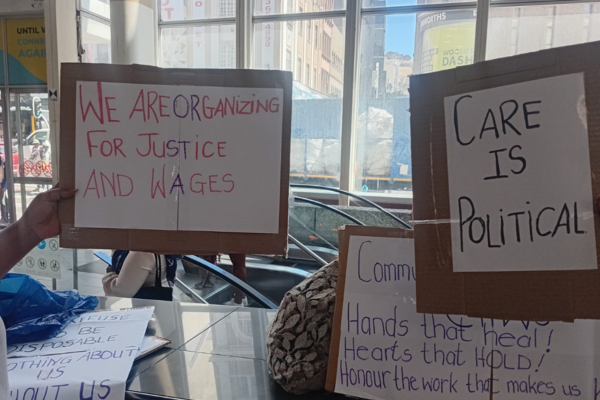
My colleague described a provincial administration in the Western Cape that has actively sought exemption from national absorption instructions, using policy ambiguity to drive a wedge between Community Health Workers and lay counsellors. Lay counsellors are being moved to NGOs without adequate training; Community Health Workers are left fighting over grading criteria rather than demanding what they collectively deserve. The province has, in effect, outsourced both the workers and the conflict.
From the Free State, a colleague said that Community Health Workers who lack matric are now afraid to attend pickets, worried that visibility could cost them the fragile foothold they have. Their workloads have meanwhile doubled — ten household visits a day where there were once five — with later finishing times and no additional recognition. The state extracts more while offering less, and workers have been made precarious enough that many feel they cannot easily speak out.
This is the picture the budget speech did not show about commitments at the national level – that on the ground, they are filtered through provincial politics, bureaucratic delays, and a system that has learned to speak the language of transformation while maintaining the structures of exclusion and non-compliance. We demand that national policy commitments are implemented consistently at provincial level.
Care workers are united
We also heard that Community Health Workers remain stoic under pressure. In Bonteheuwel, SACWF members organised what they called an “Appreciation Day”, where workers write messages of encouragement to each other on a wall.
We have five demands:
- Dignified wages
- Formal, safe and dignified working conditions
- Recognition and professional respect
- Training, career pathways and professional development
- Representation in policy design and decision making
We will not be silent about our experiences of absorption. We will ensure that the whole picture of how this process affects us is on public record.
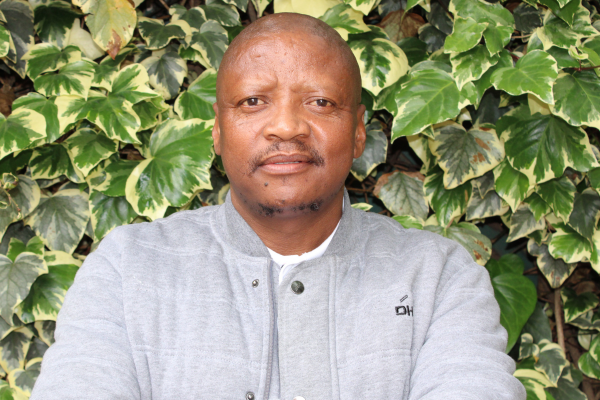
Thapelo Moncho is a member of the South African Care Workers Forum (SACWF).
SACWF is part of LRS Transforming Public Care Programmes initiative. We are advocating for decent work in the Social Sector of the Expanded Public Works Programme, together with Food Handlers and ECD Practitioners.
RELATED ARTICLES
The everyday violence against Community Health Workers
Community Health Workers still outsourced despite court ruling
Let’s organise for decent care work
How Community Health Workers secured payment of delayed stipends