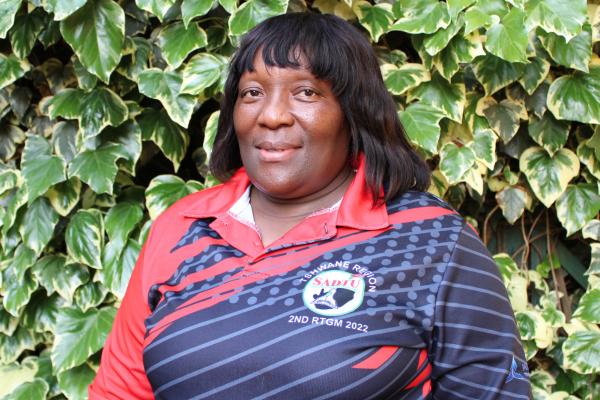
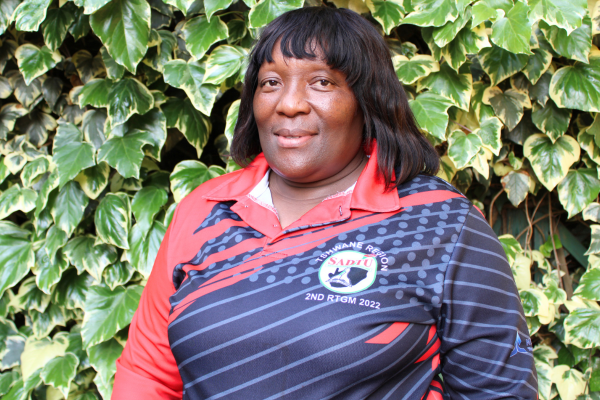
Sanah Seema is among the ECD Practitioners who have united with Food Handlers and Community Health Workers to demand decent care work within the Extended Public Works Programme.
Grade R graduation is one of the proudest moments in my 14-year journey as an ECD Practitioner. It is the moment we celebrate the children’s achievements in the foundational phase as they prepare to enter formal schooling. To prepare for the day, I review the classwork and children’s portfolios to showcase the progress in creative ways.
During one of these preparations, I came across the pencil storybook. This story built me, motivated me and reflected exactly how I see myself as an educator. I want to share the five qualities of a pencil that I relate to:
The first quality is the guiding hand. A pencil can do great things only when it is held and directed. It reminds me that we grow through guidance, support and someone who listens. No one becomes who they are alone.
The second quality is sharpening. A pencil becomes sharper through a painful process. We are the same. We go through criticism, challenges, setbacks and moments that break us a little, only to find that we come out stronger and better than before.
The third quality is the eraser. A pencil can rub out mistakes. Correcting ourselves is not shameful. It keeps us grounded and reminds us that mistakes are part of learning. What matters is moving forward.
The fourth quality is the inside. What makes a pencil useful is not its wooden exterior, but the graphite inside. Our worth is the same. It is our character, our heart, our intentions and our inner strength that matter more than outward appearances.
The fifth quality is that a pencil always leaves a mark. Everything we do leaves something behind. In teaching, these marks stay with a child forever. I remind myself daily to make my mark a positive one.
I once shared the pencil story during assembly because I wanted the learners to hear its moral. Sadly, some colleagues took offence. Some people do not see life with a positive eye. This mindset kills the spirit of a school and fails our learners.
I am the kind of educator who is greeted by many learners the moment I step onto the school grounds. They run to me for hugs. My classroom is welcoming. They check in with me. I ask them what they are going through, and I encourage them.
My Grade R kids built a robot using cobalt blocks because we want to enter a robotics competition. I want them to learn to code so that the robot can move. We never limit what children can learn. I also take learners to cultural events because I want to support their interest in creative arts, and not judge their abilities and potential. Many learners, from Grade 1 to 7, pass through my hands. I have cleaned them when they messed themselves, dressed them in spare clothes, and protected their dignity.
I have the skills and knowledge to develop children holistically. What hurts is when the school and the department assume that our intelligence is limited to the level of the children we teach. I ask you to erase that thinking. Stop calling us “Grade R” as if that is our job title. Grade R is the class we develop. It is not our name. Please value us. If a principal does not value an ECD Practitioner, the rest of the staff will follow. They will overlook us despite our contributions to shaping futures. We all claim to care about the children, so let us work together with respect.
SADTU (South African Democratic Teachers’ Union) helped me raise my voice. Before, there was discrimination. They would say, “You are a Grade R educator,” meaning I should not attend meetings or be part of school committees, that I should not speak. I felt oppressed. I mobilised Grade R practitioners in 2021 to go to the national office to demand absorption. I served as a shop steward for two terms and later became the deputy secretary of the SADTU branch, where I continue to represent the interests of ECD Practitioners. Our work and voices matter.
RELATED ARTICLE
Ligotshwa lisemanzi: Honouring the first teachers
The crisis facing Early Childhood Development Practitioners
Care work is currency
A festival of stories