
Most employers will agree that women should not be paid less than men for work of equal value. Far fewer are willing to disclose what the women on their payroll actually earn. That gap between principle and practice is where equity bargaining begins.
Equity bargaining turns the principle of equality into concrete demands that unions can negotiate. It uses collective bargaining to improve conditions of employment and to challenge the workplace practices and assumptions that continue to disadvantage women workers.
The demands below are practical starting points. Each is linked to an existing legal obligation or policy framework.
1. Demand pay data
Negotiators cannot rely on aggregate salary figures that conceal how women and men are actually paid. Differences in grade placement, overtime opportunities, shift allowances, bonuses and promotion patterns can all contribute to unequal earnings, even where basic wage rates appear similar.
Monitor wage levels and the number of women and men who are hired, promoted and dismissed, and distribution across occupations, salary grades and training opportunities. It is difficult to identify where inequality exists or to measure whether bargaining is making a difference without pay information,.
The demand: The employer must disclose payroll and personnel data, disaggregated by gender, race and grade, as part of the information-sharing process before wage negotiations. Section 16 of the Labour Relations Act requires an employer to disclose all relevant information needed for collective bargaining to a registered trade union with majority representation in a workplace, and to disclose to shop stewards the information they need to perform their functions.
2. Demand a gender pay audit and a plan for addressing gaps
Jobs predominantly performed by women have often been assigned lower value than those done by men, even where the skills, responsibility, effort and working conditions are comparable.
Section 6(4) of the Employment Equity Act prohibits differences in terms and conditions of employment, including pay, between employees performing the same or substantially the same work, or work of equal value, where that difference is based on a prohibited ground. A gender pay audit provides the evidence needed to identify where jobs may have been systematically undervalued and where wage structures need to change.
The demand: The employer should undertake a gender pay audit comparing women dominated occupations with comparable male-= dominated occupations, including work that may have been historically undervalued because of gender, race or disability. The audit should be accompanied by a written implementation plan with clear timeframes and costed proposals for closing identified pay gaps.
The audit is the evidence base for future bargaining on job grading, pay equity and workplace restructuring.
3. Demand paid parental leave that workers can afford
Parental leave is largely unaffordable for many families. While the new parental leave policy advances equality in how time off is structured, it does not solve the underlying financial burden because it is unpaid by employers. The UIF pays a portion of a worker’s earnings, creating pressure to return to work early.
The demand: The employer should top up UIF benefits so that workers receive their full salary for the entire period of parental leave. If full implementation is not immediately achievable, have a fall back plan, for example, negotiate full pay for at least the first two months, together with a clear timetable for extending the benefit over time.
4. Have the Van Wyk judgment in collective agreements
The Constitutional Court’s judgment in Van Wyk and Others v Minister of Employment and Labour recognised a shared entitlement of four months and ten days leave, which two employed parents may divide between themselves while ensuring that a birth mother retains the leave needed for recovery after childbirth. A single parent, or the only employed parent, is entitled to four months.
The demand: Include the shared parental leave entitlement in the collective agreement, applying the same principles to adoption and surrogacy. Where possible, link this demand to employer-funded salary top-ups negotiated under demand three above.
We must also monitor whether workers, especially fathers and second parents, are able to take the leave in practice. A right that is never used does not help change the unequal distribution of care work.
5. Extend family responsibility leave beyond the legal minimum
Section 27 of the Basic Conditions of Employment Act provides workers with three days’ paid family responsibility leave during each annual leave cycle. Workers qualify only after four months’ service and must work at least four days a week for that employer, which leaves many part-time workers, most of them women, outside the entitlement altogether. Unused leave does not accumulate.
A child’s illness and a death in the family can consume the whole entitlement in one quarter. Because women still perform most unpaid care work, they are disproportionately affected when leave provisions fail to reflect the realities of family life. Collective bargaining provides an opportunity to improve on statutory minimum standards.
The demand: Extend paid family responsibility leave beyond the three days provided in the Basic Conditions of Employment Act, and adopt a definition of “family” that reflects workers’ lived realities, including care for elderly and disabled dependants. The agreement should also make clear that workers may not be disadvantaged for taking this leave. Family responsibility, marital status and pregnancy are protected under section 6 of the Employment Equity Act.
6. Negotiate a GBVH clause that protects workers
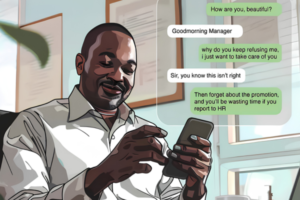
Gender-based violence and harassment (GBVH) persists because of unequal power relations that are built into how work is organised: supervisors over workers, permanent employees over casuals, men over women, employers over unions, and customers and third parties over frontline staff.
ILO Convention 190 preamble names unequal gender-based power relations among the underlying causes and risk factors of violence and harassment, alongside gender stereotypes and multiple and intersecting forms of discrimination. Naming the power dynamic is the precondition for any meaningful response.
The C190 also recognises that workers may experience GBVH while travelling to and from work, during work-related travel, at employer-sponsored events, or in interactions with customers, clients and other third parties. Recommendation 206, which accompanies the Convention, points to the heightened risks faced by workers in sectors such as health care, education, transport and domestic work, and those who work alone or at night.
The demand: A clause providing an effective reporting mechanism, paid leave for a complainant during an investigation, access to a designated support person or workers’ advocate, written protection from retaliation, and coverage of third parties, the commute, work-related travel and employer-sponsored events. The occupational health and safety committee should have sight of reported case numbers.
Read: 7 GBVH clauses unions must demand at the bargaining table
7. Extend protection to vulnerable workers
Domestic workers, informal workers, international migrant workers, and workers employed through labour brokers or contractors alongside permanently employed workers are least likely to benefit from collective bargaining. Some workers in public employment programmes are union members, yet remain outside negotiated agreements.
The demand: Extend the benefits of collective agreements to outsourced and labour broker workers on the employer’s premises. Where this cannot be achieved, negotiate procurement requirements that oblige contractors to provide equivalent terms and conditions of employment. Where public employment programme workers operate alongside union members, make their working conditions a bargaining issue rather than treating them as a matter of solidarity. Equity bargaining should narrow the gaps between workers.
8. Safe and reliable transport
The working day begins and ends with a long and often unsafe commute for many workers. Women face heightened risks of harassment and violence during their journeys. Employers should take responsibility for risks that arise because of working hours and workplace location.
The demand: Negotiate safe and reliable transport arrangements for workers whose working hours or workplace location expose them to unreasonable risks, including early and late shifts.
9. Access to childcare and care services
Access to affordable childcare remains one of the biggest barriers to women’s full participation in paid work. Supporting workers with caring responsibilities is therefore a collective responsibility, an investment in participation, retention and productivity.
ILO Convention 156 on Workers with Family Responsibilities calls on governments to develop services and policies that help workers combine paid work and family responsibilities. South Africa has not ratified Convention 156.
However, law and policy recognise care services in several ways. The Children’s Act provides for early childhood development and the care and protection of children, while national early childhood development policy recognises the importance of early childhood development services. But access remains uneven and often unaffordable, leaving households to carry the gap. Ratification of Convention 156 would strengthen demands for childcare, elder care and other public care services.
The demand: Care should be recognised, reduced, redistributed, rewarded and represented. Negotiate childcare centres, public care services and workplace support for carers.
10. Equipment and uniforms designed for everyone
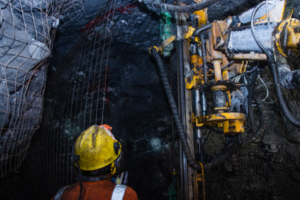
Many workplaces supply equipment, tools, and protective clothing designed around the average male body. When women are forced into poorly fitting personal protective equipment, oversized uniforms, and unsuitable tools, it causes discomfort and increases their risk of workplace injury.
The demand: Gender-inclusive procurement policies. Audit current gear and log complaints about ill-fitting equipment through occupational health and safety committees.
Essential resources