
The Inflation Monitor is a simplified version of inflation data for trade union negotiators. View the July 2026 issue.
Inflation is a sustained rise in the general level of prices of goods and services measured as an annual percentage increase, so the July 2026 rate compares prices with July 2025. A falling rate of inflation means prices are rising more slowly.
The Consumer Price Index is the official inflation rate. Statistics South Africa measures the prices of more than a thousand goods and services every month.
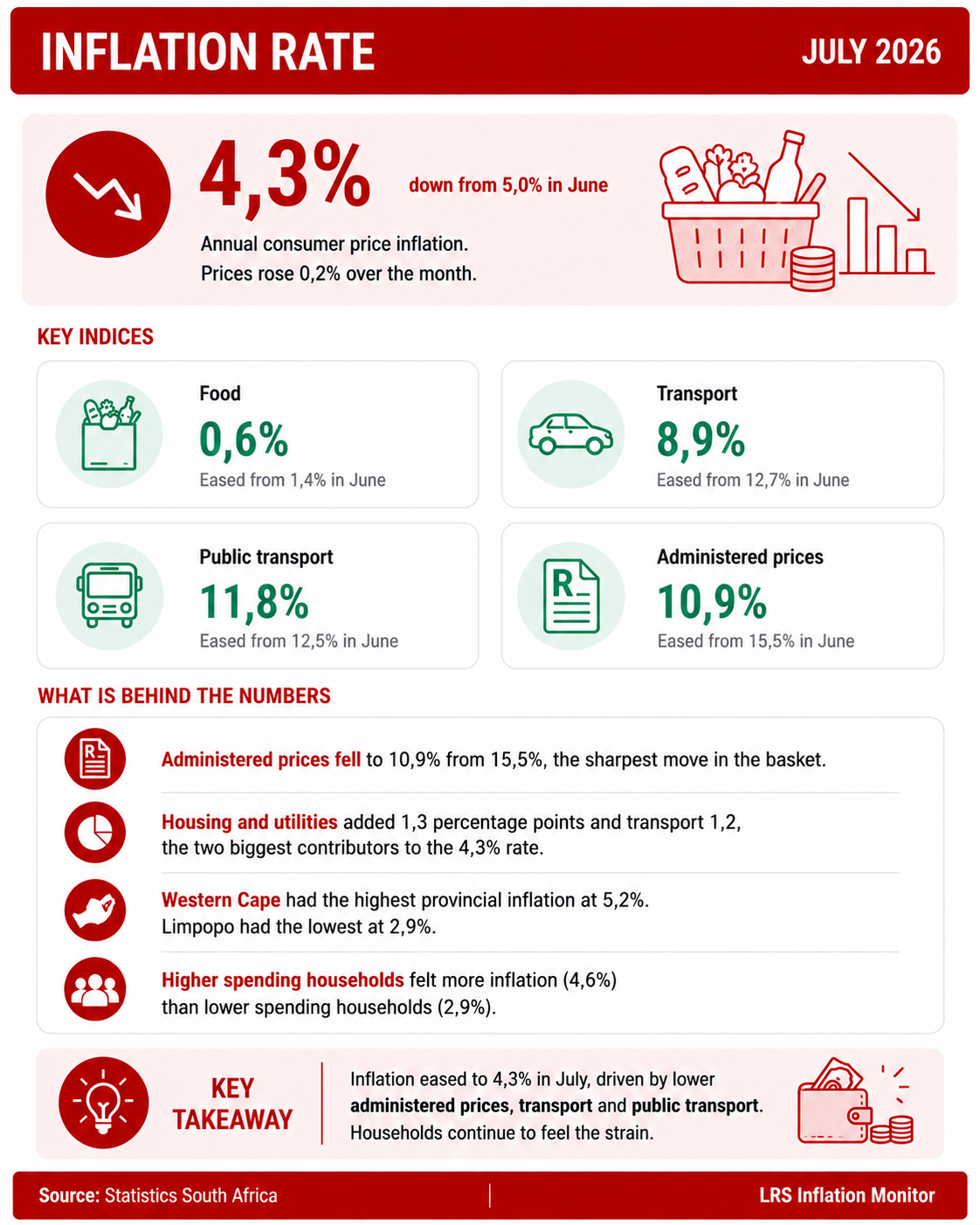
There is no single inflation rate. There is a headline number, and then there is what workers actually spend.
A worker who takes a taxi to work every day faces 11,8%, not 4,3%. A worker in a household where electricity and water are a large share of monthly spending faces administered price increases of 10,9%. Municipalities implement their annual tariff increases in July, which is why housing and utilities jumped.
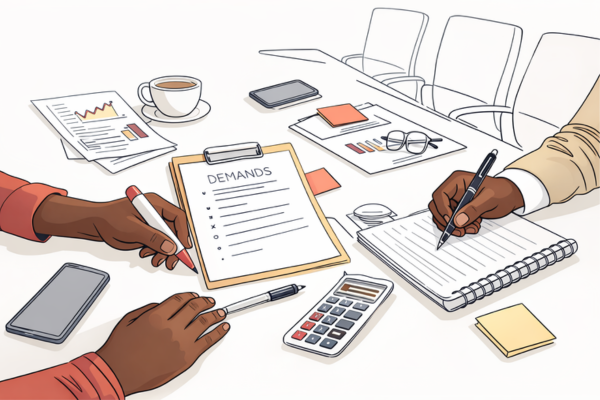
Treat 4,3% as a starting reference. Build the demand around the specific costs for workers, and use the category figures to show why the headline rate understates their experience.
Checklist for dealing with inflation in wage increases
- What is the wage increase percentage that is on the table?
- What is the latest rate of inflation?
- What is the trend in inflation over the last 6 months or more?
- What does it tell us about the likely inflation rate over the next 12 months? Are there any other reasons why inflation might increase or decrease significantly in the coming months?
- Is the wage increase greater than inflation?
- How much of the increase is left after inflation?
- How much do we want the buying power of the wage to increase by?
View the July 2026 issue of the Inflation Monitor.
RELATED RESOURCES