
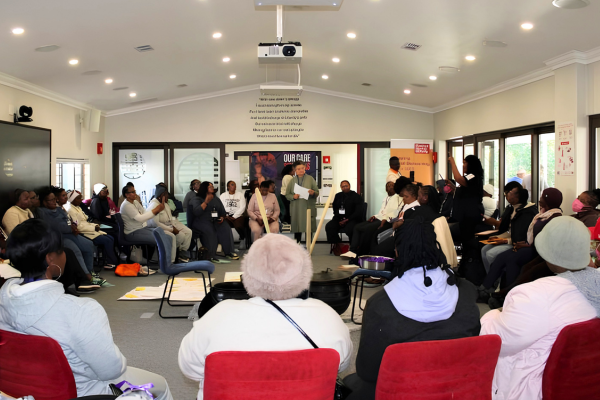
The Labour Research Service, together with care workers and partner organisations, convened the second Care Workers Convergence in June in Johannesburg, to build a shared understanding of care work, a vision of a National Care Infrastructure, and to strengthen organising and solidarity across care sectors.
Building on the first convergence, Care Workers’ Day and other engagements, 60 Community Health Workers, Early Childhood Development Practitioners and school Food Handlers from across the country convened to collectively analyse and transform their experience into political evidence.
THE LEKGOTLA OF CARE
Drawing inspiration from lekgotla, a traditional practice of collective deliberation, dialogue and shared decision-making, care workers became the authors of evidence. They presented their personal stories as testimony, reflected collectively and analysed for the broader social, political and economic realities. The intention was to recognise lived experience as a legitimate form of evidence capable of exposing the structural realities of care work. Through collective dialogue, workers examined where care takes place, who carries responsibility for it, who benefits from it, and where recognition and investment remain absent.
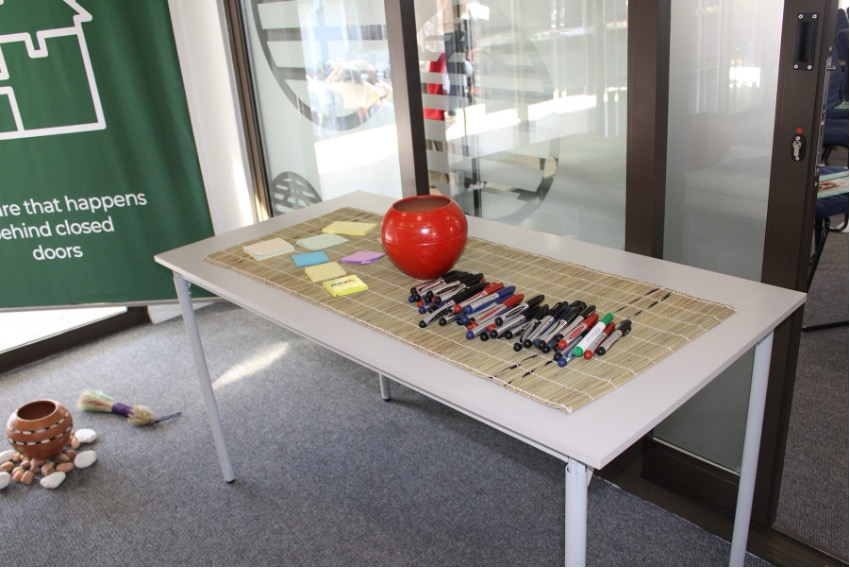
The evidence table.
Care workers' statement of findings
The lekgotla findings are collective conclusions reached by care workers themselves through testimony, dialogue, reflection, deliberation, and a shared understanding of why care work must be recognised, valued and invested in as essential public infrastructure.
"A story belongs to the person who lived it. A finding belongs to all of us. These are our findings."
– Care workers in social sector of EPWP
1. Care work creates value, the whole system rests on us
Care workers at the Community Health Worker evidence session.
Care work keeps the whole system running. “We are the eyes, the ears for all departments. We are the backbone for every department. If we stop working the economy would collapse.”
2. We are invisible because the system chooses not to see us
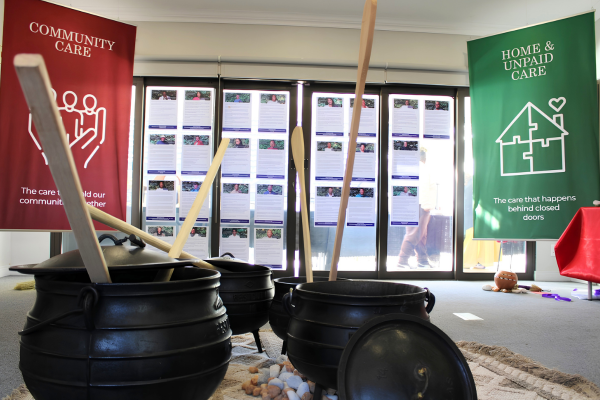
Our stories on the wall at the convergence exhibition
“Care work remains invisible because the system goes blind on purpose. We call it patriarchy. Hide the labour and keep the benefits.”
Workers know how the trick works. Call the work unskilled, even though cutting fifty bags of cabbage is a skill. Call the worker a volunteer so you never have to pay her properly. And when a pandemic arrives, upgrade her to essential worker until it passes.
3. They treat care as free because we are women
To the narratives that;
- “Women have always cared. Isn’t caring just part of who we are?”
- “You do this work because you love people. Why must everything become about money?”
- “You chose this work knowing it was voluntary.”
- “There are many priorities. The country cannot afford to employ everyone.”
We say that care is not free (just) because we are women.
4. We are exploited by design
Stipends instead of salaries. No benefits, maternity leave, PPE, and transport allowance. Contracts are too short to mean anything. And no answer when we ask who our employer is.
“We want to know who’s the third party between the principal and the Department of Education. Where do we fall? Society says care is priceless, but the budget treats us cheap.”
5. Our love for this work is being used against us
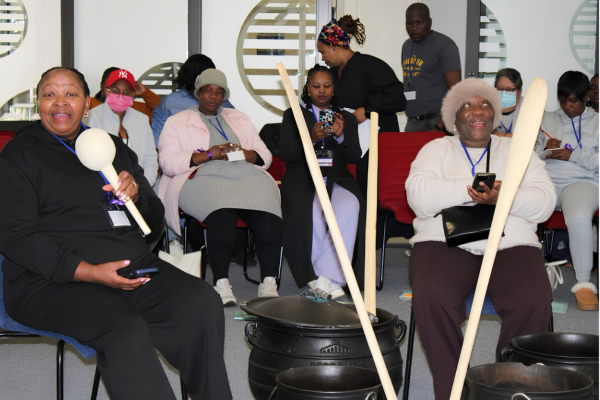
Care workers at the ECD evidence session.
We love this work. We say it with pride, the joy of seeing the children eat, the trust of the community, the love at the heart of everything we do. But loving it does not mean it’s for free.
“Once you care… you start realising this is a job. I need to get paid for this. Unfortunately, you are in a country where the system does not yet realise that care must be paid for.”
6. We carry knowledge, even when they refuse to see it
“I am a nurse to those who fall and hurt themselves. A social worker to those who had a terrible experience. Some call me an educator or a practitioner. I define myself as a teacher.”
Our knowledge and skills must be we already carry is real, and it must be recognised and valued.We want training and certificates.
7. We subsidise the State with our own pockets and bodies
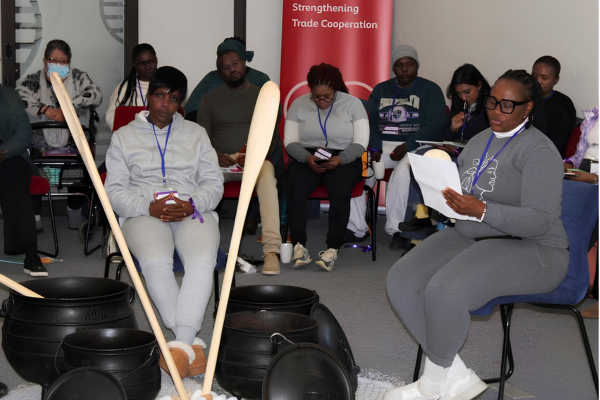
Working together to analyse the evidence.
We buy what the school doesn’t provide. We walk when there is no transport. We enter homes without masks. Some of us got sick. Some of us died. We keep filling the gap, and the gap is not fixed.
8. We are organisers and leaders, not charity cases
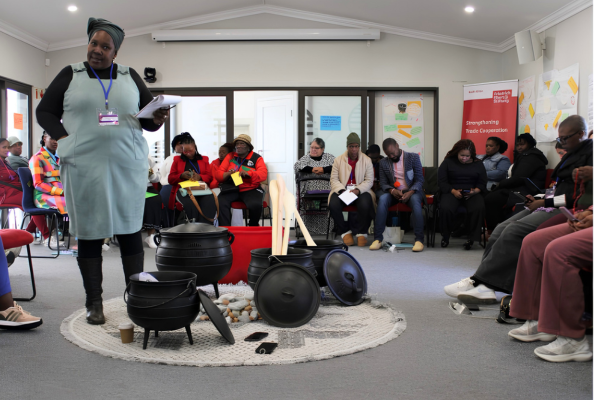
Report back from the collective reflection.
We joined unions, we formed forums, we started organising. We were no longer silent. We were no longer alone. Most importantly, we were no longer afraid. Nothing about care should be decided without us.
“We are asking for justice, dignity and recognition for the work we do.”
9. A society that values care must move us from the margins to the centre
A society that values care must support us, protect us, recognise us as vital to an effective national care infrastructure, respect us, acknowledge us, and pay us fairly.
Together we affirm:
- Care is not charity.
- Care is not volunteerism.
- Care is not simply women’s work.
- Care is work.
- Care has value.
- Care is infrastructure.
- Care workers matter.
Download: Care workers statement of findings
Care workers will use the findings in their organising, and budget and policy advocacy.
METHODOLOGY
The lekgotla of care: Transforming stories into evidence
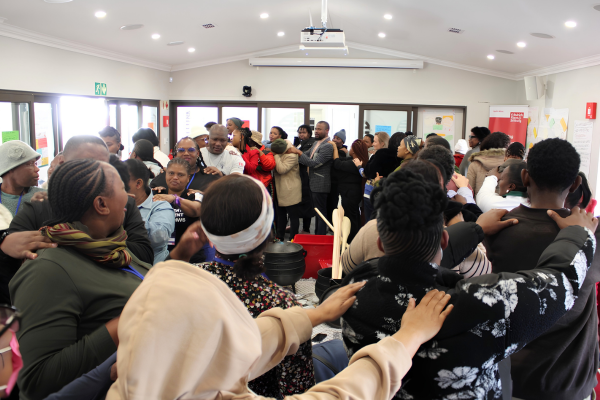
Our solidarity circle.
We designed the Care Workers Convergence on a methodological question:
How can workers' lived experiences become collective evidence capable of informing organising, advocacy and public policy?
We positioned care workers themselves as the primary producers of knowledge. We created the conditions for workers to analyse their own experiences collectively and draw conclusions about the systems shaping their lives and work.
We used the lekgotla, also drawing on practices that recognise that those who live a reality are best placed to analyse it, including women’s circles, people’s inquiries, worker education, public truth-telling, and participatory action research.
The lekgotla of care process moved through a series of stages, each building on the previous one.
Stories as testimony
Before the convergence, care workers wrote and shared personal stories about their work. These stories documented everyday experiences of care, relationships with communities, working conditions, struggles for recognition and the meaning they attached to their work.
At the convergence, we presented the stories publicly as collective evidence.
The four pots
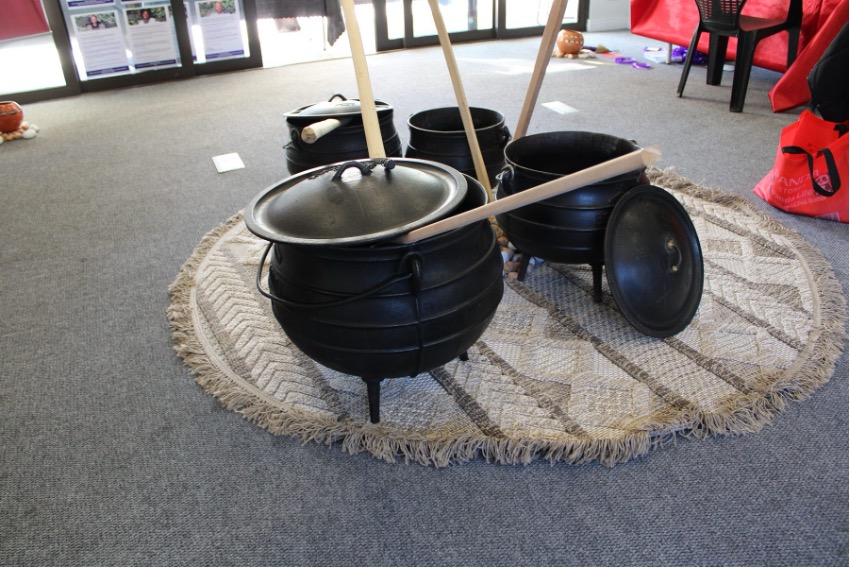
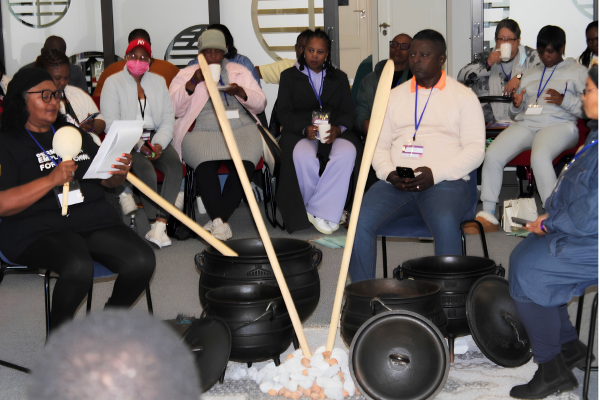
The four pots at the centre of the Lekgotla, the home, the community, the state and the global.
We organised the Lekgotla around four symbolic pots placed at the centre of the room. Th pots represented the different spaces where care is carried, shared, contested and valued. As testimony unfolded, participants reflected together on where each story belonged, what it revealed about care, and how it connected to broader social realities. The pots became tools for collective thinking, enabling the care workers to identify patterns that extended beyond individual experiences – between households, communities, public institutions and the State.
After listening to the testimonies, participants entered a process of collective reflection: What do these stories tell us about how care is organised? What patterns do we recognise across different sectors? Who carries the responsibility for care? Who benefits from this work? Why is this work so often invisible or undervalued? Workers then responded to the structural assumptions about care wor that shape public attitudes, labour systems and government policy.
Evidence before the lekgotla
Worker stories
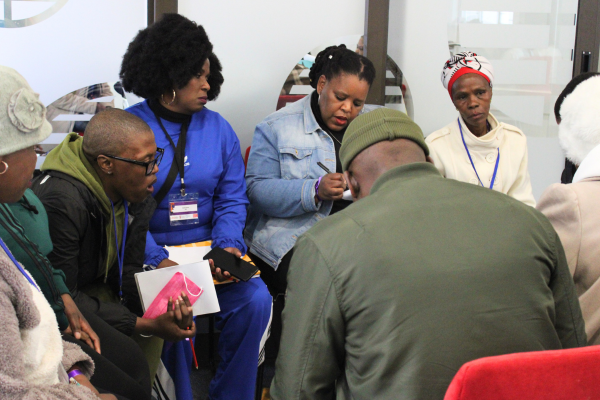
Working together to develop findings.
The foundation of the convergence was a collection of personal stories written by Community Health Workers, Early Childhood Development practitioners and School Food Handlers. The stories documented the everyday realities of care work, its responsibilities, relationships, struggles, achievements and emotional labour. Together they revealed patterns across different sectors of care. The stories became the primary evidence upon which the Lekgotla was built, and collective political evidence informing organising, advocacy and public policy.
Throughout the convergence, stories were continuously revisited. Care workers engaged with them during the portrait exhibition, through gallery discussions, written reflections, group dialogue and the final collective affirmation.
The care worker portrait exhibition
Care workers walked through their stories exhibition displayed at the meeting venue, noting common experiences and their reflections on sticky notes placed on the evidence table alongside the stories. For many participants, this was the first time they had seen their own work publicly recognised in this way. The exhibition transformed individual stories into a shared public archive of care work.
Testimony at the Lekgotla
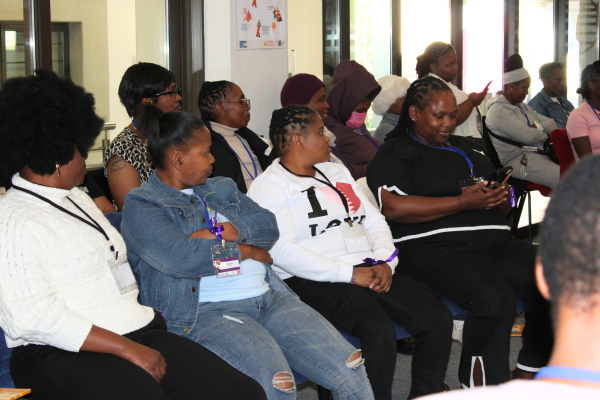
Lekgotla proceedings - members listen to testimonies.
Selected stories from each care sector were presented as formal testimony during the Lekgotla with workers themselves becoming the witnesses. Each testimony was followed by collective discussion in which participants reflected on what the story revealed about care, work, recognition, responsibility and public value. The testimonies enabled workers to identify recurring themes that extended beyond individual experience and reflected broader structural realities.
Collective deliberation
Throughout the convergence, workers engaged in facilitated dialogue around the Four Pots. These discussions enabled care workers to move beyond describing individual experiences towards identifying common patterns across sectors, challenging public narratives against emerging evidence and establishing that structural beliefs continue to justify the undervaluing of care work.
Collective reflection
Evidence was also generated through a range of participatory activities conducted throughout the convergence.
Wokers documented their reflections through written responses, exhibition feedback, group discussions and collective exercises.
These reflections provided additional evidence of how workers interpreted the testimonies, how they understood the relationship between different care sectors and how their own thinking evolved during the convergence.
After action review
Following the convergence, facilitators and partners undertook a structured After Action Review. We have several important observations, including the emergence of a stronger collective care worker identity, increased confidence among care workers participants, deeper solidarity across sectors and a significant shift from individual experiences towards shared political understanding.
Convergence report
While the Statement of Findings is grounded primarily in worker testimony and collective deliberation, the Convergence Report provides complementary analysis that supports and contextualises many of the conclusions reached by the Lekgotla.
Statement of findings
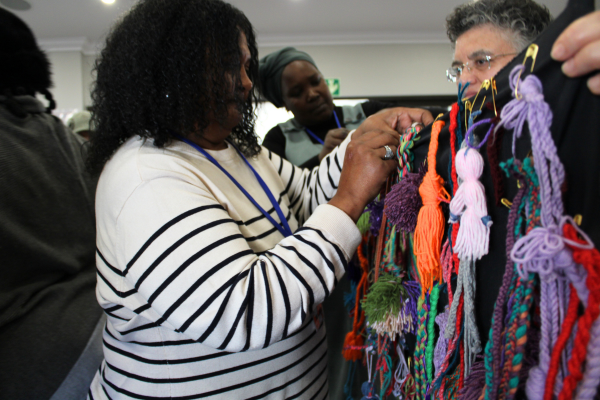
The care workers' tapestry created at the end of the convergence. Each participant crocheted a piece of wool.
Although Community Health Workers, Early Childhood Development practitioners and School Food Handlers perform different forms of care, participants repeatedly identified common experiences of invisibility, professional commitment, gendered responsibility, public dependence and systemic undervaluation. The statement of findings therefore represent the collective conclusions reached by care workers after examining their stories and identifying the broader structural realities the stories revealed.
June 2026 | Johannesburg