

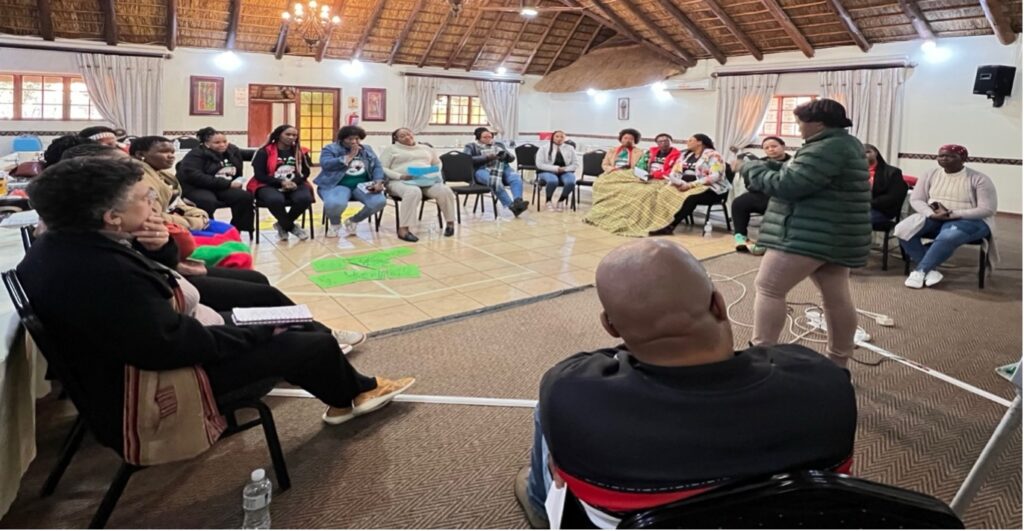
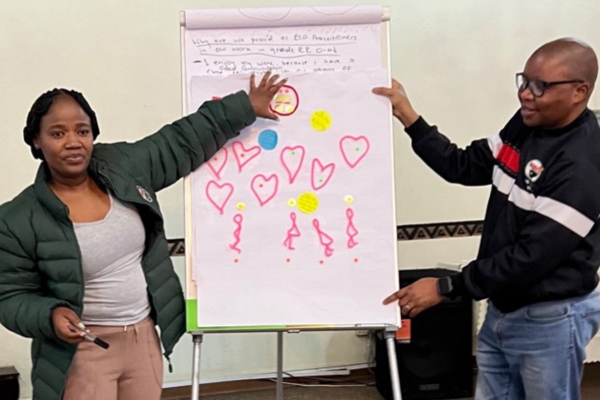
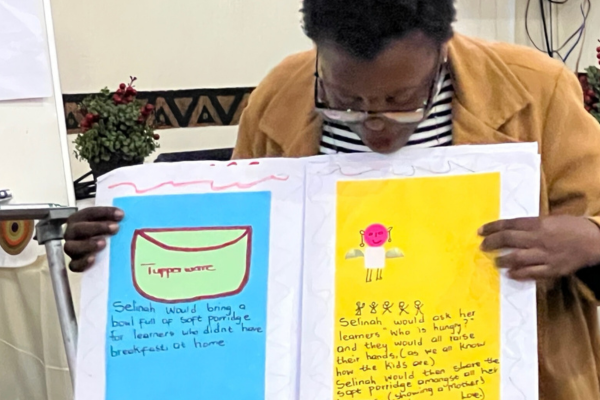
It is still early, but the day at the Early Childhood Development (ECD) centre is already in full motion. Children arrive with small backpacks and bigger voices, greeting their teachers with smiles and waves. In one corner, a few are stacking brightly coloured blocks; in another, a group sits cross-legged listening to a short morning story. The air hums with both play and purpose. For many of these children, this is their very first experience of structured learning, their first taste of routines beyond home, and their first step into the wider world of schooling.
“Ligotshwa lisemanzi” is a Zulu proverb that reminds us that it is far easier to mould, guide, and teach a young person than to change the ways of someone older. A fresh, pliable branch bends with ease; a dry one resists. In the same way, children are most receptive to learning, influence, and guidance in their earliest years.
In South Africa, Early Childhood Development Practitioners (ECDPs) are often the first formal educators a child will ever know. They are the primary agents of socialisation, guiding countless “firsts”: the first time a child plays alongside a peer, the first time they hear their name written down, the first stringing together of letters into words, the first confident “one, two, three” when counting.
More than a classroom
ECD centres are not simply places to “keep” children; they are dynamic spaces where the architecture of learning and personality is built. They prepare children for the foundation phase of formal schooling, ensuring they arrive not only ready to learn but eager to learn.
These practitioners help children reach milestones that go far beyond academics. They nurture a positive sense of self beyond the family unit, allowing children to see themselves as capable, independent agents. They develop early social skills, learning to take turns, negotiate, share space, and resolve conflict, all within a safe environment. They also build communication skills, teaching children to express themselves clearly and confidently to both peers and adults.
And then there is the physical side: fine motor skills honed through threading beads, painting, or cutting paper, and gross motor skills strengthened in outdoor play, dancing, and movement games.
The power of play
Perhaps most importantly, ECDPs understand something often forgotten in policy discussions: play is not a break from learning, it is the learning. Through play, children practise problem-solving, test their memory, and internalise lessons. In many of our programmes, practitioners use play as a measure of whether a concept has truly landed. A child building a tower and explaining its height, or acting out a story with friends, is showing deep comprehension and retention in a way no test could capture.
Beyond babysitting
It is vital for society to recognise and respect the work ECDPs do and to reject the reductive view of them as “mere babysitters.” This misunderstanding erases the depth of skill, planning, and observation that their role demands. They are educators, designers of learning spaces, facilitators of social growth, and guardians of emotional well-being.
Without the benefit of access to early childhood development, many children would enter the foundation phase at a disadvantage. The ripple effects of this can last for years, influencing academic confidence, social ease, and even long-term educational outcomes. The work of ECDPs helps ensure those ripples begin as waves of readiness, not obstacles to overcome.
A standing ovation for the invisible
While this piece pays homage to the care, creativity, and expertise of ECDPs, it also acknowledges that their work is too often undervalued and unseen. For now, let it be known, ECD practitioners are not simply preparing children for school. They are shaping citizens, thinkers, and dreamers. And they deserve to be recognised as the first, and among the most important, teachers in our lives.
RELATED ARTICLES
The crisis facing Early Childhood Development Practitioners
My story of the pencil
A festival of stories
Transforming Public Care Work Programmes in South Africa initiative is supported by the SAGE Fund