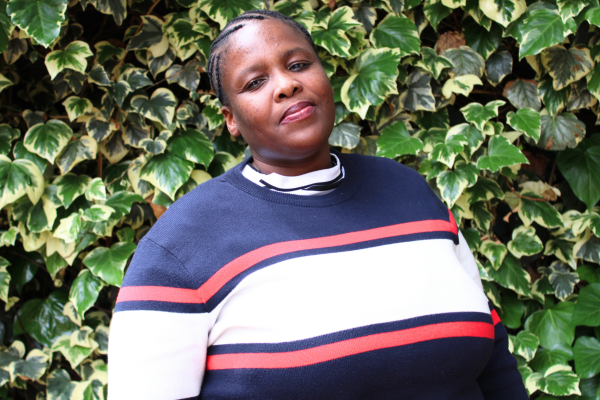
Bulelwa Faltein bears witness to the women who volunteered in the late 1990s to link clinics with their communities, and who, decades on, are pushed out at 55 with nothing to show for it.
I have worked for over 20 years in community health. My story is about our mentors – the women who started very young in the sector, and who now, when it is time to retire, have nothing.
From around 1997, community nursing services came into our communities and asked for volunteers, specifically young women, to become the link between the clinics and the community. The women would report to the facilities and be given a list of people who needed care and support at home, for example, new mothers.
After a year of working, the volunteers earned a stipend of R500 every three months. In some cases the stipend payment delayed by up to six months.
Initially, these volunteers worked under the Department of Health, under community health services. Later they were taken over by a small project. Then, in 1998, the HIV testing services programme began, and some of them joined it. Those who joined the HIV programme received what was called the LATIS stipend of R600, while the others received R500. The stipends were not paid sometimes, but increased over time. The women got kits containing items like gloves, aprons and masks. Often, they would take food from their own homes to households that had nothing.
In 2010 they were taken back by the Department of Health under the PERSAL system, and the stipend became R1 500. Now UIF was deducted. Then, in 2019, the Department said that everyone aged 55 years and above would be removed from the system, claiming they were no longer fit enough to do the work, that they must stay at home, and their contracts would not be renewed. The women fought, and they were brought back. After that, every year before signing the contract, you had to declare that you were still fit and still able to do the work.
And all these years, as they reached 50 or 55, the elders were getting sick.
At 55, the Department would write a letter saying your contract had been terminated, and tell you to go to SASSA to apply for the old-age grant. But even there it is a struggle. SASSA would turn them away, saying: you cannot get a pension here, you must go to the Department, because you were working for the Department. And it takes six months with nothing while you wait for your UIF, because the Department of Labour has its own processes and some of them are very slow. So that woman struggles, with nothing. After being tossed in and out, she finally gets her old-age grant, and that is all. There is no proper send-off, no thank you from the Department. The only thing they carry home is the letter saying the contract has been terminated. If one gets sick at 55, still too far from the old-age grant, she just stays at home with nothing, dependent on her family, until she turns 60 and is eligible for the old-age grant.
What pains me most is this struggle with belonging. When these women retire, they belong nowhere. The Department of Social Development says you do not belong here because you were working for the Department of Health. And the Department of Health says you were only assisting us, you were under the Expanded Public Works Programme. So even in retirement, the struggle continues.
And there is more pain still. When one of us has a stroke, or goes blind, there is no support. Even when a care worker dies, the only thing the family receives is the stipend for the month she worked. If I died on the 1st of September, then by the 30th – having not worked into October – there would be nothing for my family. It would be a struggle even to give me a decent memorial, just to honour the impact I made.
They don’t recognise the soldiers who do the work. The work simply continues, and that is it.
RELATED ARTICLES
I am a Food Handler, and I deserve dignity and rights
Care work is currency
Decent work goals for care workers