
Climate change is changing the conditions in which people work, produce and trade. It affects which jobs exist, the skills workers need and the infrastructure that connects workplaces to markets.
Trade and climate change are closely connected. Production that depends on fossil fuels, and the transport of goods by road, sea and air, add to carbon emissions. At the same time, climate change disrupts trade when extreme weather damages transport and logistics infrastructure. It also changes the conditions for sectors such as agriculture and tourism.
The LRS policy brief, Just Transition and the African Continental Free Trade Area (AfCFTA): Some policy options for trade unions, cites projections that Africa’s agricultural exports could fall by around 60% by 2080, as temperatures rise, rainfall patterns change and plant pests and diseases spread.
Africa is also largely missing from trade in climate-relevant goods, which are products that support climate change mitigation and adaptation. Climate-relevant goods made up only 7.6% of world goods trade in 2022. In 2020, developed economies supplied around 70% of climate technology exports.
Figure 1: Global Trade in Climate-Relevant Goods and Technologies
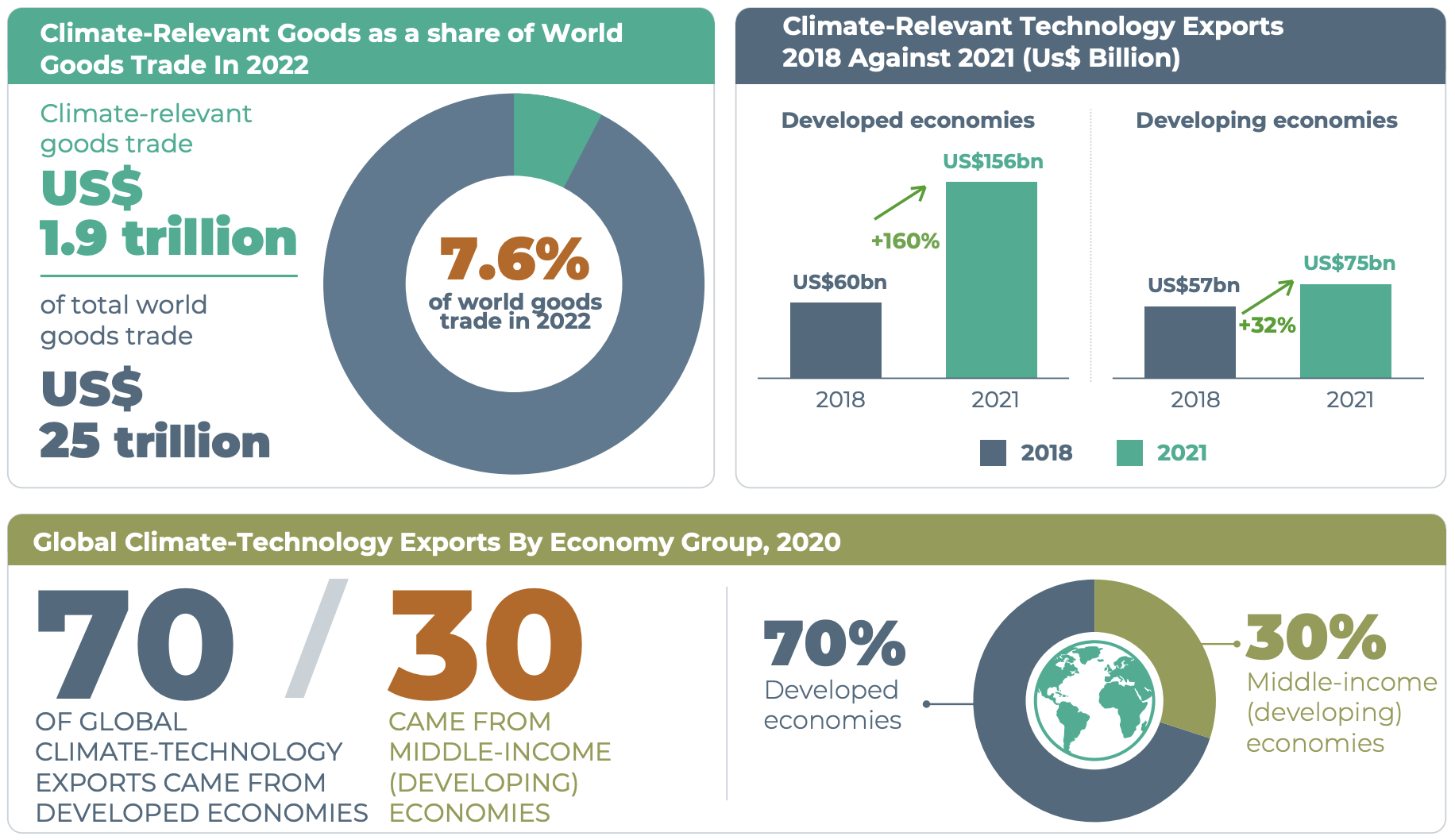
Source: Prince Asafu-Adjaye, P. (2026), Just Transition and the AfCFTA: Some policy options for trade unions
Climate change remains marginal in most trade union agendas, even though it poses existential challenges to the labour movement.
The AfCFTA can support a just transition
The AfCFTA unites 55 countries and eight Regional Economic Communities (RECs) into a single continental market of 1.3 billion people. The policy brief argues that the AfCFTA can accelerate industrialisation, increase intra-African trade and diversify Africa’s sources of growth.
The AfCFTA can also help advance climate goals. The agreement recognises that trade rights should be exercised in ways that do not compromise environmental protection or sustainable development.
The AfCFTA Protocol on Investment gives unions a strong basis for advocacy. Its section on investment and climate change requires Member States to:
- Promote and facilitate investments that support actions to mitigate greenhouse gas emissions and adapt to the adverse impacts of climate change.
- Promote and facilitate investments that contribute to financing regional climate mitigation and adaptation programmes.
- Support investments relevant to a fair and just transition in sectors such as renewable energy and low-carbon technologies, including adopting policy frameworks that enable the transfer and deployment of climate-friendly technologies and goods, while considering socio-economic constraints, particularly those affecting workforce transitions.
- Promote and facilitate new investment regimes, such as low- or zero-carbon Special Economic Zones.
- Encourage investments that reduce climate change impacts on exhaustible natural resources, including freshwater and biodiversity.
- Cooperate with other State Parties on investment-related aspects of climate change policies and measures.
Unions can use these commitments to demand skills development, access to sustainable jobs, social protection for displaced workers and respect for just transition principles.
What is a just transition?
The International Labour Organisation (ILO) defines a just transition as “greening the economy in a way that is as fair and inclusive as possible to everyone concerned, creating decent work opportunities and leaving no one behind.”
A just transition centres those most affected: workers, vulnerable communities, suppliers of goods and services (especially small and medium-sized enterprises) and consumers. It aims to maximise the social and economic opportunities of climate action while minimising its risks.
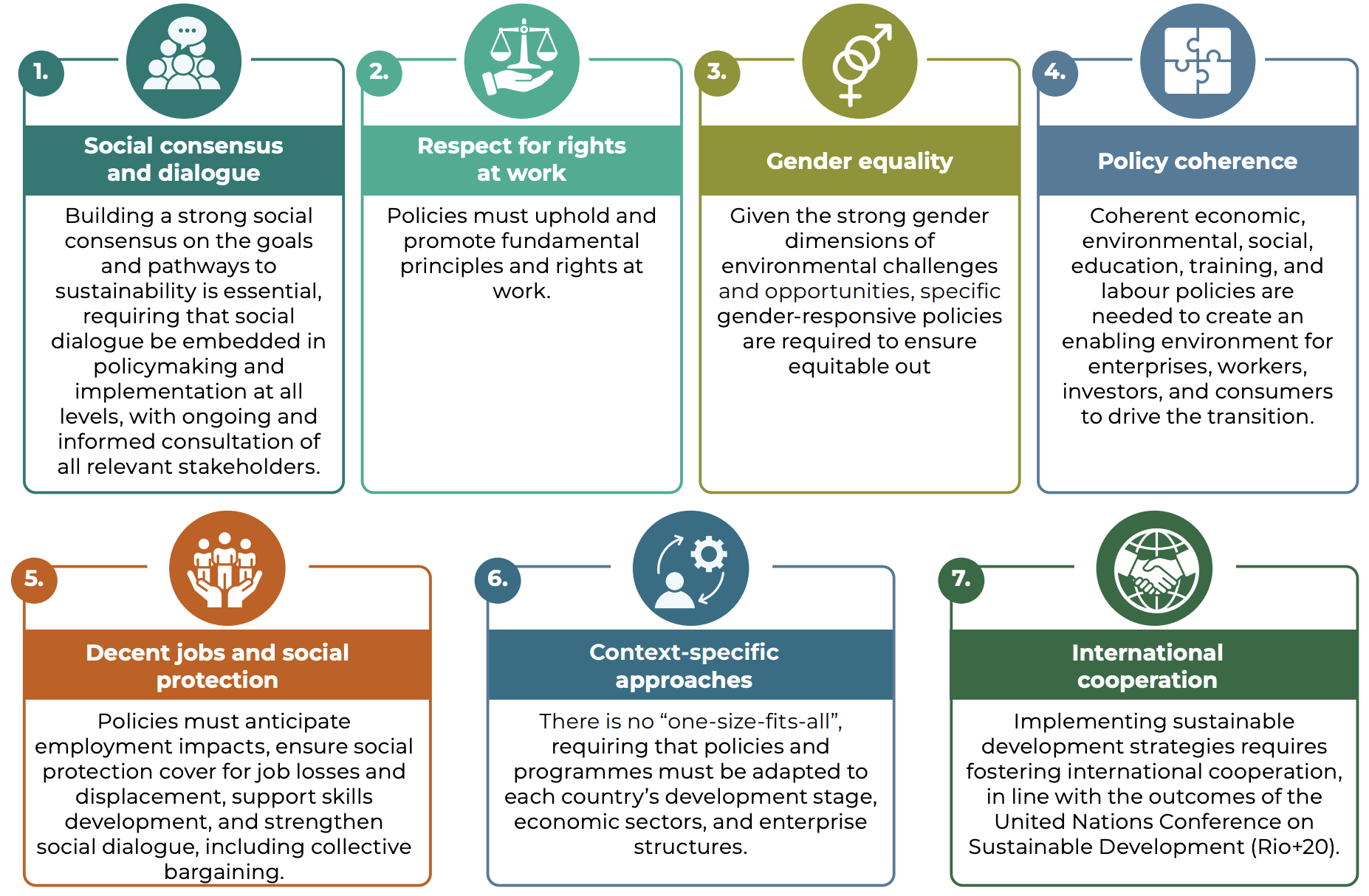
The ILO’s Just Transition Guidelines set out seven principles for achieving environmentally sustainable economies and societies that unions can use in their advocacy.
Figure 2: ILO Just Transition Guidelines
Source: ILO (2015) Guidelines for a just transition towards environmentally sustainable economies and societies for all
Just transition in the energy sector
The energy sector shows most clearly why the AfCFTA needs a just transition. Without it, the continent cannot meet its industrialisation and trade ambitions. In West Africa, countries such as Nigeria, Ghana and Côte d’Ivoire have excess generation capacity, but network and grid limitations constrain their electricity exports.
A transition to a sustainable energy mix can support inclusive growth, reliable energy for industrialisation and new employment opportunities. An LRS discussion paper, Defining a Just Transition for Sub-Saharan Energy Workers, notes that, if managed well, the shift can promote social inclusion and help address poverty and structural inequalities created by existing neoliberal economic models. If the transition is poorly managed, it could bring significant job losses and restrict access to energy for vulnerable communities. Traditional energy policy models can also concentrate power, excluding some social groups from decision-making and reinforcing political capture and clientelism.
“Sub-Saharan Africa has contributed the least to climate change but stands to suffer its most severe consequences.”
The LRS discussion paper sets four roles for unions in shaping a just energy transition: anticipate change, promote sustainable industrial policies, advocate for strong social support programmes, and campaign for creative, worker-centred labour adjustment programmes.
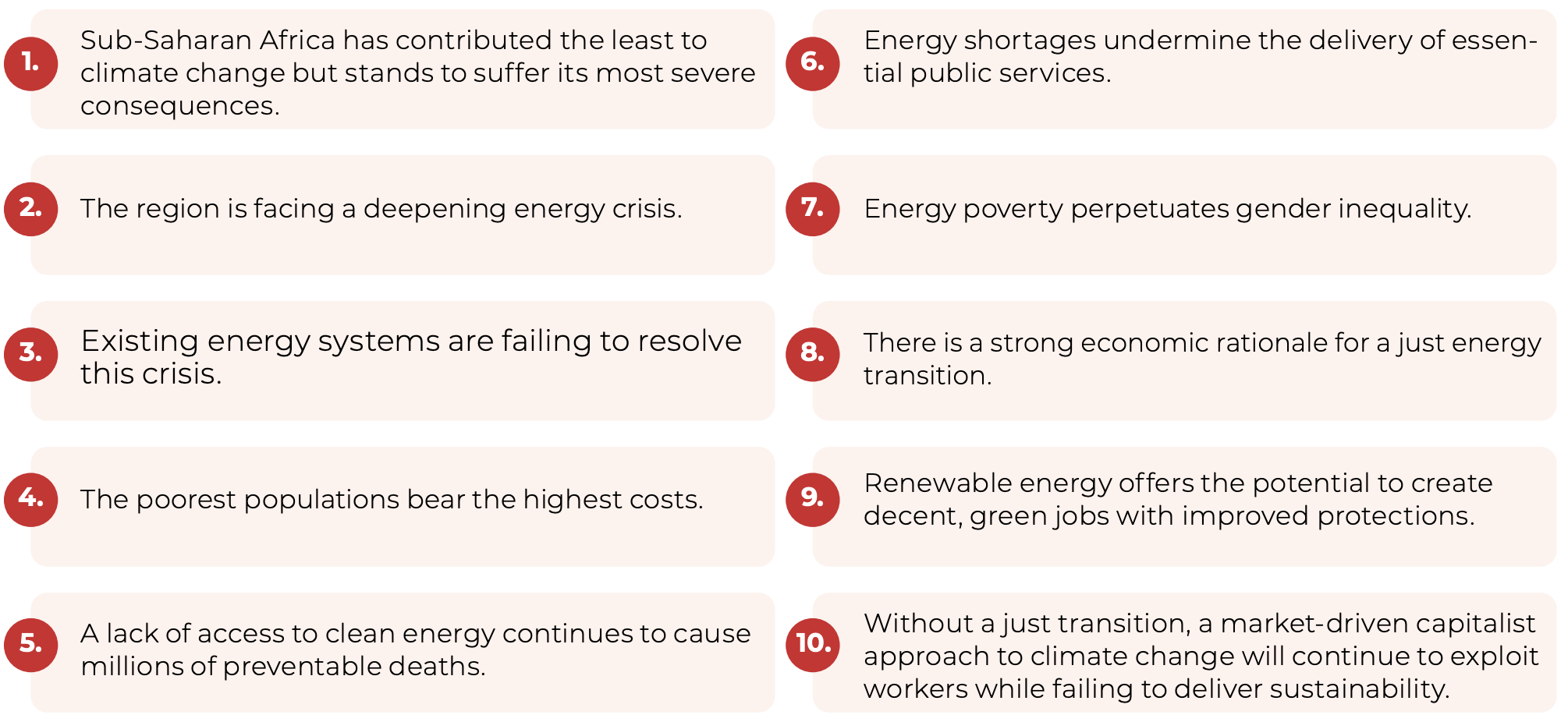
The paper outlines ten arguments for pursuing a just transition in Africa’s energy sector.
Ten trade union arguments for a just energy transition in Africa
Source: Daniel, M. (2020) Defining a just transition for Sub-Saharan energy workers: A discussion paper of the Sub-Sahara Africa Energy Network
An assessment of power sector unions in eight African countries found limited engagement on climate change: low involvement in policy development, research, education and training, advocacy and social dialogue. Meanwhile, national and continental energy frameworks already have far-reaching implications for workers in the sector. The policy brief argues that employers, governments and unions must collaborate through social dialogue to provide worker support, invest in training and education, create redeployment opportunities, invest in affected communities and create decent, secure jobs in emerging green sectors.
Worker representatives can turn these principles into bargaining demands:
- Ask management for its plans to cut emissions, switch fuels or bring in new technology, and which jobs will change.
- Demand advance notice and consultation before changes are made.
- Redeployment before retrenchment. Workers in affected jobs get first access to new roles.
- Income and social protection. Secure support for workers whose jobs are lost or changed during the transition.
- Retraining and continuous professional development in collective agreements, paid by the employer.
Policy options for trade union advocacy
The policy brief sets out five priorities for trade union advocacy.
- Include just transition in AfCFTA campaigns. Labour provisions remain essential, but unions should also make just transition a core AfCFTA demand, using the Protocol on Investment and the ILO’s Just Transition Guidelines.
- Mainstream just transition in union strategies. Put mitigation, adaptation, decent jobs, social protection and inclusive development at the centre of union programmes. Unions should engage public and private institutions to secure just transition measures in policy and collective agreements, while regional and continental bodies coordinate national campaigns.
- Campaign for sustainable transport. Unions should advocate for modern, efficient and climate-resilient transport infrastructure under the AfCFTA that advances sustainable development and decent work.
- Promote green skills. The transition will create demand for new skills in renewable energy, sustainable manufacturing and climate-resilient agriculture. Unions should advocate for training, lifelong learning and continuous professional development, embedded in collective agreements and policy frameworks, with equal access for women and marginalised groups. For a complementary resource focused on green skills, see Green jobs and skills: 5 things unions should be asking.
- Strengthen regional cooperation and solidarity. Trade and climate change both cross national borders. Unions need stronger cooperation across Africa to share knowledge, coordinate campaigns and advocate together on trade, climate change and labour issues. Alliances with civil society organisations, academics and labour support organisations can strengthen capacity and amplify workers’ voices.
Together, these policy options can position trade unions as central actors in ensuring that the AfCFTA delivers not only economic growth, but also climate resilience, social justice, and decent work.
Read the full policy brief: Just Transition and the African Continental Free Trade Area (AfCFTA): Some policy options for trade unions
Trade union policy briefs series:
- Industrialisation in Africa and the African Continental Free Trade Area (AfCFTA): Some policy options for trade unions
- Labour Provisions for the African Continental Free Trade Area (AfCFTA): Some Policy Options
- Trade, Employment and Trade Unions in Africa: Some Policy Options
- Trade Union Informal Cross Border Trade (ICBT) Advocacy in Africa
Dr Prince Asafu-Adjaye is Associate at Labour Research Service.