
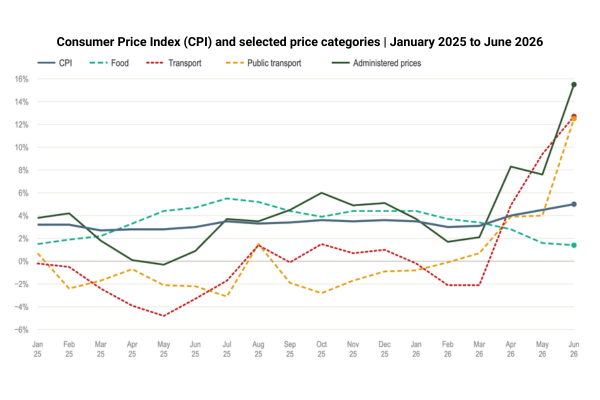
The annual headline inflation reached 5,0% in June 2026, up from 4,5% in May. It is the highest rate in two years and the fourth month in a row that inflation has climbed. The Reserve Bank held the repo rate at 7% and the prime lending rate at 10.50% on 23 July.
Transport inflation reached 12,7% in June, up from 9,4% in May. It contributed 1,7 percentage points to the headline rate, more than any other group. Fuel prices were 34,3% higher than a year ago. Diesel rose 50,8% and petrol 31,7%.
Public transport inflation jumped to 12,5% in June from 4,0% in May. Minibus taxi fares rose 11,5% in a single month. E-hailing rose 8,7% and long distance bus fares 8,4%.
Administered prices, the prices government sets or influences, reached 15,5% in June from 7,6% in May.
Food inflation eased to 1,4% in June from 1,6% in May. Staples such as maize meal and rice came down. Diesel at 50,8%, is what moves food from the farm to the shop. Diesel is expected to rise again in early August while petrol falls slightly.
Inflation by province: Western Cape recorded 5,9% in June, the only province above the headline rate. Limpopo was lowest at 3,6%. Free State and Gauteng both sat at 4,9%.

Four things to do with June inflation numbers
- Treat 5,0% as the floor. The Reserve Bank target of 3% is what it wants inflation to be. The measured rate is 5,0% and it has risen every month since February.
- Bargain transport separately. A percentage on basic wage does not answer an 11,5% jump in taxi fares in one month. Put the transport allowance on the agenda as its own item, with its own adjustment, and push for a review date rather than a single annual figure. Where the employer provides transport, protect it.
- Build in a review. Oil prices moved sharply through July on the conflict in the Middle East, and the August fuel adjustment is still uncertain. A twelve month agreement signed on June numbers carries that risk entirely on the worker side. Ask for a shorter term or a reopener tied to a stated CPI threshold.
- Get information. The lowest spending tenth of households recorded 2,9% inflation. The highest spending tenth recorded 5,5%. That looks like the poor are protected, and it is misleading. Those figures reflect what each group buys in total. A member who spends a large share of wages on taxi fares to reach the workplace is carrying the 12,5% number, not the 2,9% one. Ask your members what they actually spend to get to work, and take that to the table.
View the June Inflation Monitor, with the full tables, including eight years of monthly data for CPI, food, transport, public transport and administered prices.
RELATED RESOURCES
- Bargaining Benchmarks | June 2026
- The Real Economy Bulletin
- Wage Bargaining Review | 2026
- Introduction to wage bargaining