
Through storytelling, Community Health Workers show the impact of their care in communities, even as they continue to struggle for recognition and decent work.
At LRS, we recognise the power of worker stories in advocacy and the importance of safe storytelling spaces. Twice a month, we facilitate online meetings for the South African Care Workers Forum (SACWF), where members connect, share stories, learn, and strategise.
During August Women’s Month, Community Health Workers shared powerful stories of how their care work restores the dignity of patients, transforms lives in communities, and sustains the health system at the grassroots.
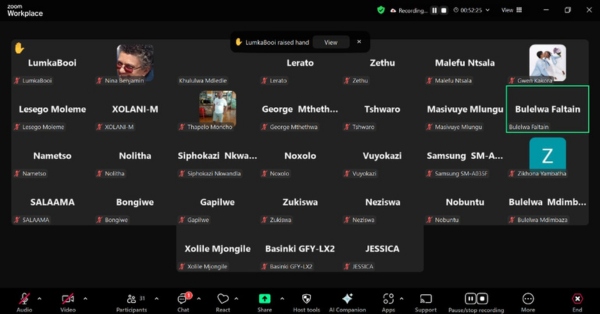
SACWF August storytelling prompt: “Think of a time when you felt that the care work you were doing contributed to a process aimed at transforming society. Where you could feel that the work you do strengthened human dignity both for yourself and the people you are caring for.”
Breaking the silence
A Community Health Worker recalled a young girl who came to the clinic for an HIV test. Though still a minor, untouched by relationships, the result came back positive. Her family, who had lost relatives to HIV/AIDS, avoided the topic. Silence and stigma filled the home. The care worker stepped in, offering counselling with persistence. She became a friend to the family, helping them learn about HIV, encouraging testing, and slowly breaking the silence. Today, family members who once rejected the subject are ambassadors for HIV awareness, guiding others toward treatment and support.
A home for a child
A Community Health Worker told the story of a nine-year-old girl abandoned by her grandmother after her mother died of HIV. That night, the child found shelter in her home. She raised the girl as her own, paid her school fees, and provided the love and care she needed. Out of this act of compassion grew a support group, which later became an NGO run by women living with HIV.
Growing food, growing hope
A Community Health Worker spoke about patients who had lost hope after diagnosis, only to regain confidence through adherence counselling, support groups, and food gardens. Gardens flourished, patients gained strength through treatment and good nutrition, and small harvests became a source of income. Care work reached beyond the clinic, helping to rebuild lives.
The activist left behind
A Community Health Worker described supporting a blind woman, once an activist, who had been left to live alone in poverty and debt. The care worker visited weekly, bathing her, checking her medication, and enlisting support from neighbours and the local church. She even appealed to the mayor’s office. Her dedication restored dignity to a vulnerable elderly woman.
Restoring dignity to the forgotten
A Community Health Worker remembered finding a man abandoned in a shack back room, stage-four HIV, starving and alone. Despite being told not to, she brought him food in her car each day and stayed with him until he regained strength. Years later, he still greets her in the street, introducing her as the woman who saved his life.
From a wheelbarrow to walking tall
A Community Health Worker recalled the day a man was brought into the clinic in a wheelbarrow, too weak to walk. He tested him, counselled him, and worked with his girlfriend, who remained HIV-negative, to support his recovery. Today, he is healthy and determined. The couple’s trust in the health system was restored because a Community Health Worker stepped in at a critical moment.
Dignity denied
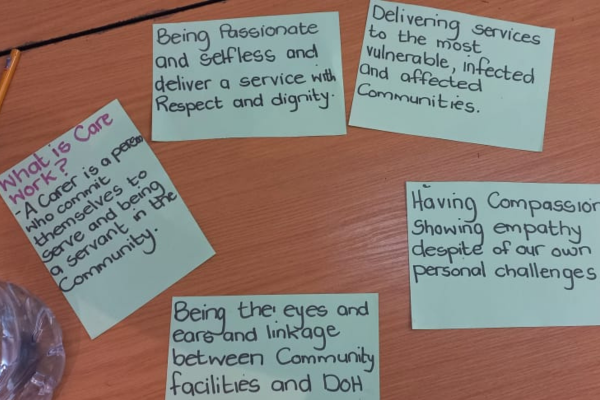
These stories of life and death, of hunger and survival, of despair turned into hope, remind us that Community Health Workers are essential educators, compassionate caregivers, resourceful connectors, and steadfast advocates in their communities.
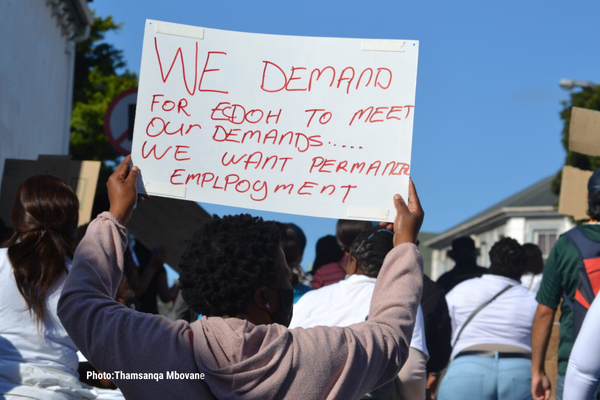
While Community Health Workers give dignity to others, they often struggle to receive it themselves. They are trusted and respected in their communities. Yet they remain overlooked by the government: underpaid, insecure, and denied the benefits and recognition that other health professionals receive. This is the paradox of public care work: essential to the survival of communities, yet treated as expendable by the very systems that depend on it.
SACWF is challenging the State’s neglect of their working conditions and the undervaluation of care work in public care programmes. Members are organising, telling their stories, and sharpening their advocacy messaging.
“We are essential, not invisible”
Stories are an organising tool for Community Health Workers. In our online meeting spaces, care workers amplify their voices, strengthen strategies for recruitment, organising, and advocacy, and communicate a simple message: we restore dignity, sustain life, and deserve decent work.
Women’s Month reminded us that the work of care is also the work of resistance. Community Health Workers hold families and communities together, fill gaps in an overstretched public health system, and create hope. Their demand is clear: to be recognised, valued, and adequately remunerated as the essential workers they already are.
Community Health Workers: “Nothing about us without us”
Women care workers organise for decent work
Decent Work: Transforming Public Care Work Programmes in South Africa initiative is supported by the SAGE Fund.