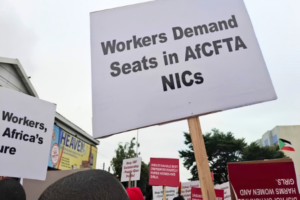

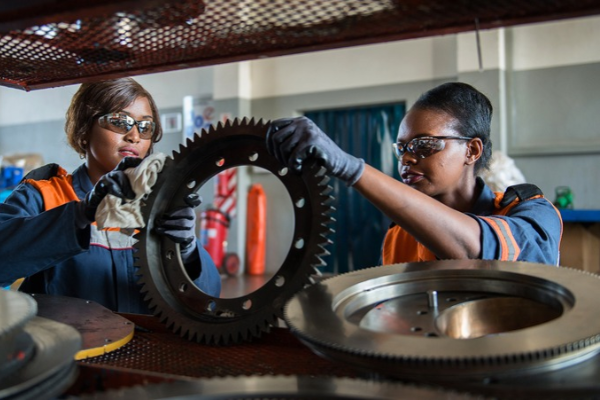
Africa has a young and growing population. The African Continental Free Trade Area (AfCFTA) promises new opportunities for jobs, business and trade. Will young people benefit, and what can trade unions do to make sure they do?
"If they know you, they help you. If you are new or young, they will disturb you more."
That is how one trader at the Aflao border between Ghana and Togo describes crossing with goods in the ITUC-Africa study of informal cross-border traders in West and East Africa. The study found that young traders are more likely to be targeted for questioning and extortion, especially when they are new or lack documents.
The AfCFTA aims to make trade across Africa easier. Businesses are expected to produce more, reach new markets and build links across borders. For young people looking for work, growing a business or already trading, this is an opportunity. But more trade does not automatically mean more jobs. And more jobs do not automatically mean decent work.
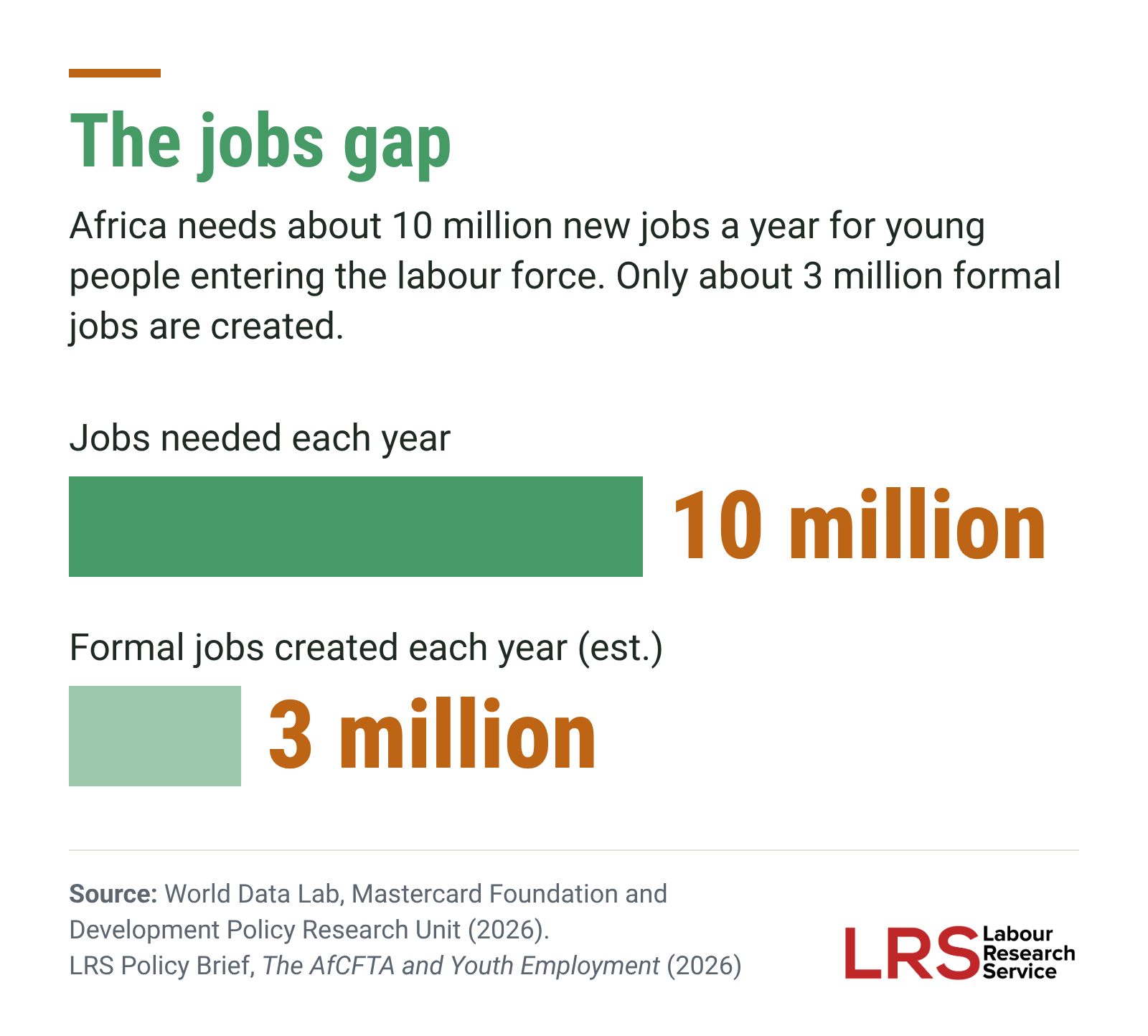
Africa needs 10 million jobs a year but creates 3 million formal jobs
Africa has more than 400 million people aged between 15 and 35. They bring energy, ideas and skills that could drive economic growth.
An estimated 10 million jobs are needed every year to absorb young people entering the labour force. Only about 3 million formal jobs are created annually.
Most young people who cannot find formal work earn a living in the informal economy, where wages are low, conditions are often unsafe and there is little chance to build skills or move up. Almost one-third of Africans aged 15 to 35 are in vulnerable employment. They work for themselves or as contributing family workers.
Estimates suggest the AfCFTA could generate between 13 million and 16 million jobs. Intra-African trade in manufactured goods is projected to more than double by 2035, and agricultural trade is also expected to grow. Agri-food trade in particular could create jobs at scale, open space for new businesses and strengthen value chains across the continent.
These are potential jobs, not jobs waiting to be filled. Skills gaps and structural barriers could stop young people from taking them up.
Many young people earn a living from cross-border trade
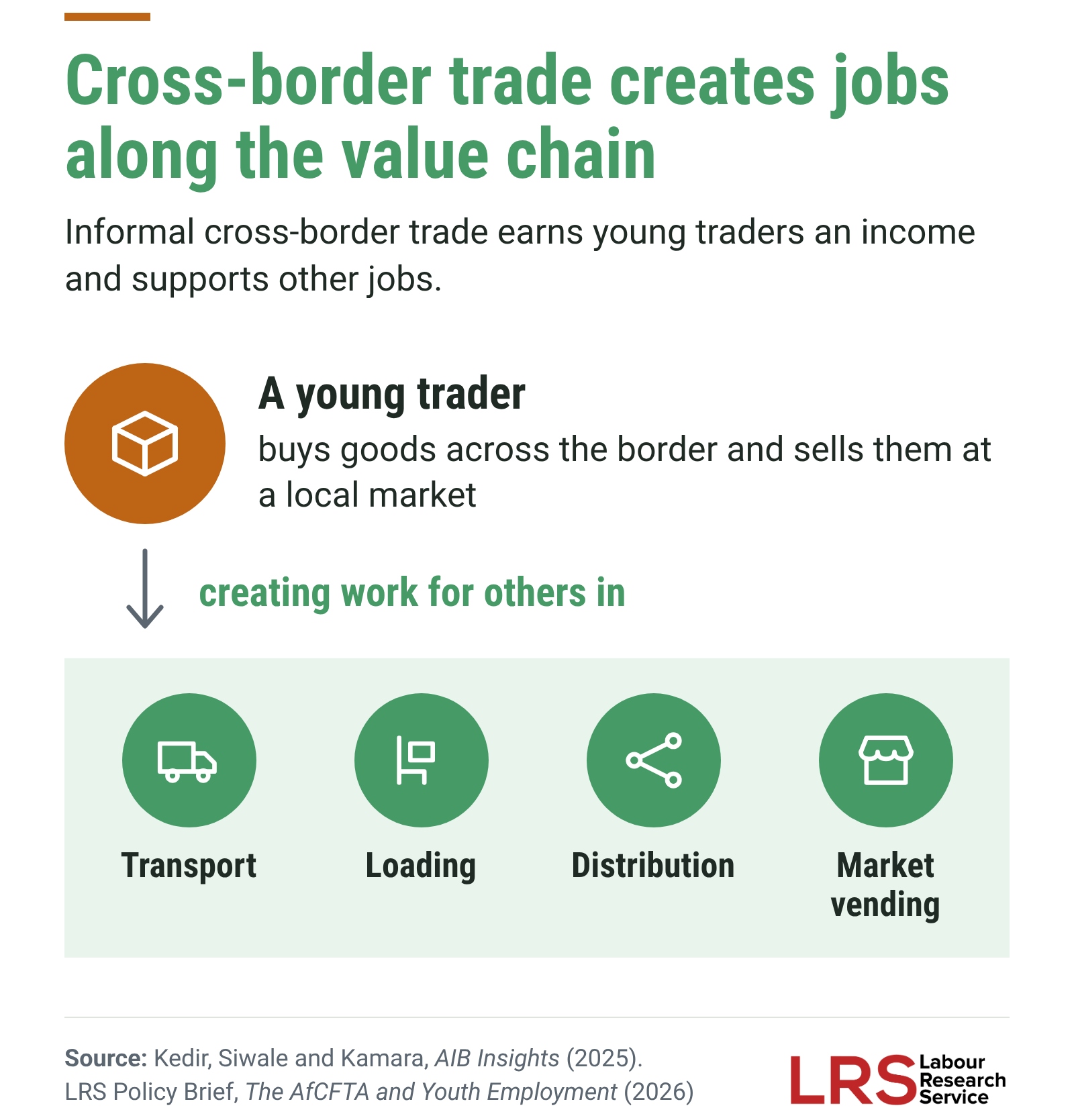
Informal cross-border trade is an important source of income for young people. Women make up about 70% of all informal cross-border traders. A young trader who buys goods across the border and sells them at a local market also creates work for others. People transport the goods, load and unload them, distribute and sell them. This trade creates livelihoods, even when it happens outside the formal economy.
Traders often work in difficult conditions. They face complicated border procedures, poor infrastructure, limited access to finance and technology, and exploitation and corruption at border posts. Making cross-border trade easier must also mean making it fairer and safer.
Most border traders have never heard of the AfCFTA's youth protocol
The AfCFTA includes a Protocol on Women and Youth in Trade. It aims to improve access to opportunities, strengthen capacity to trade, increase participation in regional and continental value chains, and help formalise trading activities. Young people can also influence how the AfCFTA develops through the Independent Continental Youth Advisory Council on AfCFTA (ICOYACA).
Yet the ITUC-Africa study found that most traders at the borders it surveyed had never heard of the Protocol. They had received no information about it from government agencies, border authorities, unions or trader associations.
A protocol on paper is not enough. Can young traders cross borders more easily? Can young entrepreneurs get the finance and support they need? Will young workers have the skills for new jobs? Will those jobs offer fair pay, safe conditions and workers’ rights? These questions need answers as the AfCFTA is implemented.
Four ways trade unions can make the AfCFTA work for young people
The LRS brief argues that the challenges and opportunities facing young people in the AfCFTA are a trade union concern. Unions can act through advocacy, engagement with governments, and organising and representing workers.
- Make youth employment and entrepreneurship part of union advocacy on trade and the AfCFTA.
- Push for investment in young people’s skills, including technical and vocational training, STEM and apprenticeships.
- Strengthen union advocacy for informal cross-border traders.
- Tackle the barriers young entrepreneurs face, such as limited access to finance, markets and business networks.
Through these steps, unions can advance the rights and interests of young people while organising young workers and renewing the movement.
Young people will benefit only with investment in skills, jobs and infrastructure
A young population does not automatically produce a demographic dividend. The benefits of the AfCFTA will depend on investment in young people’s skills, decent job creation and infrastructure, and on policies that remove the barriers young workers and entrepreneurs face.
Read the policy brief, The African Continental Free Trade Area (AfCFTA) and Youth Employment, for the full analysis and the four recommendations for trade unions.
Main photo credit: Northern Technical College, Ndola/Volvo Group
RELATED RESOURCES