

Consumer inflation rose to 4,5% in May 2026, up from 4,0% in April. It is the second month in a row that the rate has climbed.
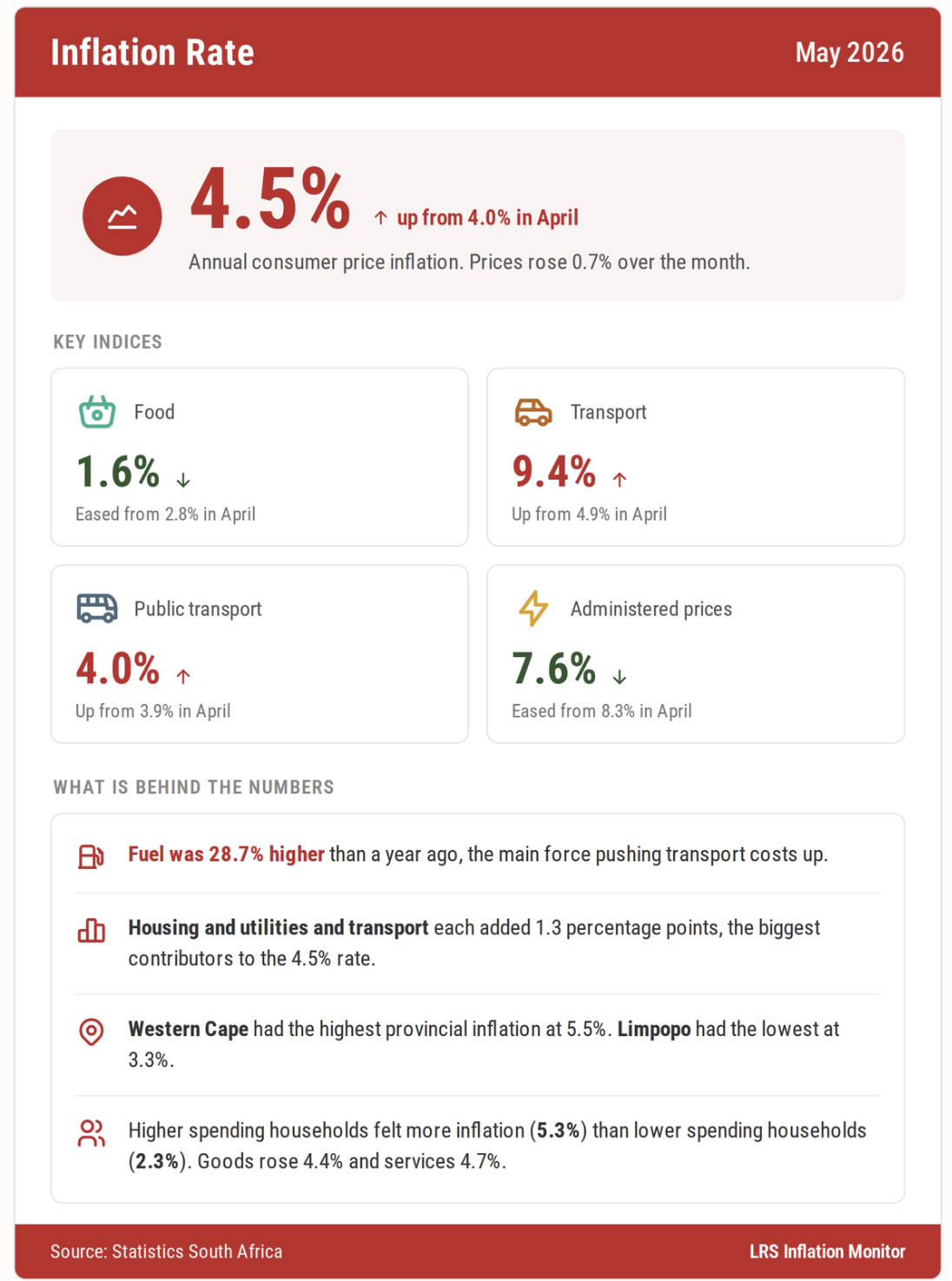
Transport led the increase, jumping to 9,4% from 4,9% the month before. The main force behind it was fuel, which cost 28,7% more than a year ago. Housing and utilities also pushed household budgets. Together, transport and housing and utilities added the most to the headline rate.
Food inflation eased to 1,6%, its slowest pace in over a year. But inflation is never the same for everyone. Lower spending households faced a rate of 2,3%, while higher spending households faced 5,3%. Where you live matters too. Prices rose 5,5% in the Western Cape and 3,3% in Limpopo.
For wage negotiators, the headline rate is the floor, not the ceiling. This issue breaks the numbers down by key sub-categories, province and income group, so you can build demands that reflect what your members actually pay.
Read the full May 2026 Inflation Monitor.
The Inflation Monitor is a simplified version of inflation data for trade union negotiators, published monthly by the Labour Research Service.
RELATED RESOURCES