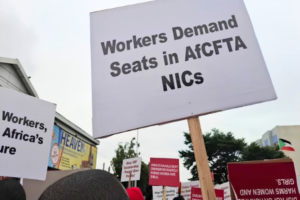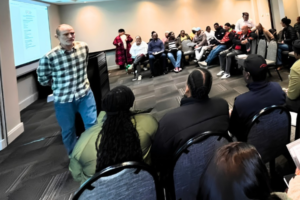


Riefdah Ajam, General Secretary of the Federation of Unions of South Africa (FEDUSA), discusses how the union, as an equal partner in South Africa’s formal social dialogue structure, NEDLAC, influences trade and investment policy and advocates for a social clause in the AfCFTA.
What are FEDUSA's experiences of trade and social dialogue?
FEDUSA has been engaged in social dialogue for many years. We have been privileged to be part of the premier social dialogue forum in South Africa, the National Economic Development and Labour Council (NEDLAC). Within NEDLAC, there are four chambers, one of which is dedicated to trade and industry. FEDUSA has both a representative and an alternate in the trade and industry chamber to ensure continuity and sustainability in our engagement.
There is also a dedicated subcommittee, the Technical Sectoral Liaison Committee (TESELICO), in which we participate actively. Our involvement has been shaped by the experiences of one of our affiliates, the National Union of Leather and Allied Workers, which faced enormous challenges due to imports that, at certain points in South Africa’s history, led to significant job losses. Our role in TESELICO has been to ensure that tariffs are carefully considered and adjusted to protect jobs and industries.
South Africa has long had a trade imbalance, and our focus has been to strike a fairer balance. In this context, the AfCFTA brings a degree of leverage to influence trade processes, and our involvement flows directly from our participation at NEDLAC. Likewise, FEDUSA has also been privileged to have a delegate involved in World Trade Organization discussions.
The ability to focus on fundamental trade and investment issues gives us the opportunity and the privilege to be true to our mandate as trade unionists – bringing about social justice in the face of the harsh realities of a changing world of work.
What does it mean in practice to participate in NEDLAC?
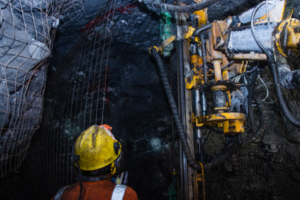
Much of FEDUSA’s focus has been on the manufacturing sector, which employs workers whose wages may not always be high but whose skills are essential. Within NEDLAC, we engage deliberately and intentionally with government, business, and organised labour, alongside community, which forms the “tripartite plus” structure. We bring the mandates of our members directly into policy discussions. There have been some wins.
For example, we have pushed for preferential procurement, a principle we would also like to see advanced within the AfCFTA. We have also engaged in tariffs and quotas. When South Africa suffered from cheap imports, particularly from China, it was through the trade chamber that we gained direct access to the minister and his teams, and influenced the terms of engagement and results.
Many other countries on the continent lack a structure similar to NEDLAC. We must encourage information sharing about social dialogue and how social partners can meaningfully influence trade policy. When partners engage honestly, putting real issues on the table, we can collectively pursue decent work and fair economic outcomes.
What are FEDUSA’s demands on the AfCFTA?
FEDUSA’s demands regarding the AfCFTA focus on the inclusion of a social clause to protect fundamental workers’ rights as outlined in the ILO’s conventions. We aim to promote fair trade and equal opportunities, ensuring that no party gains at the expense of another, and to prevent further deindustrialisation. We demand re-industrialisation, but on a fair and level playing field.
Africa has faced harsh realities when it comes to workers’ rights, health and safety, and trade relations. Intra-African trade must unfold in a way that benefits all. We support free trade and the opportunities across the continent, especially in light of shifts in geopolitics and international trade. We believe the AfCFTA can be the ideal vehicle, provided there is transparency, accountability and inclusion.
What message do you have for the government on trade policy and the AfCFTA?
Government is a partner in a formal social dialogue mechanism, and unions are not there as rubber stamps. We are there to advance the interests of organised labour. While we often advise the government, we do not always agree with the terms and conditions they table. FEDUSA has a strong record of fighting for the interests of our members, and we will continue to do so.
Where there is productivity, fair trade, and profits, we want to see the shared proceeds of that productivity. Africa is often referred to as the “sleeping giant.” We would like to see that giant rise to achieve shared prosperity, shared economic advancement, and true liberation for all. Amuka Africa!