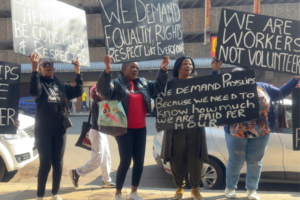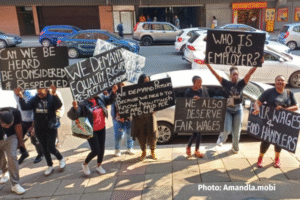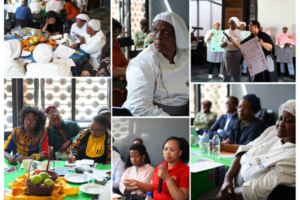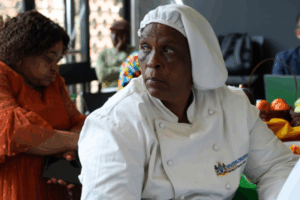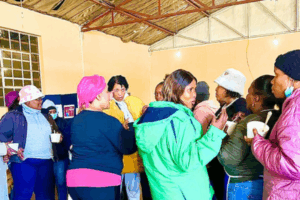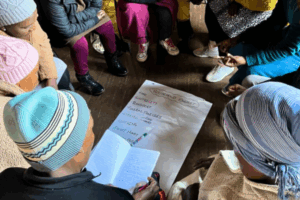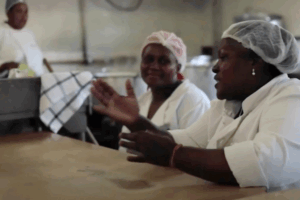
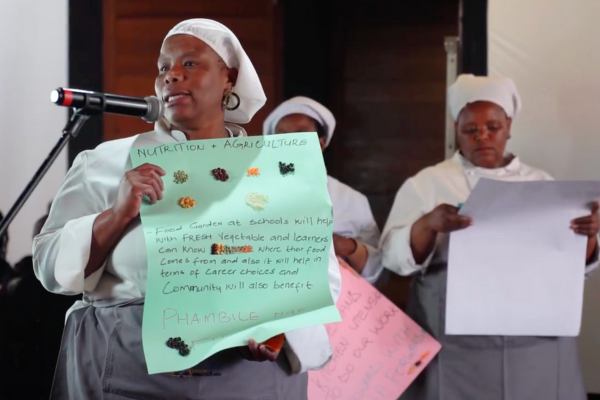
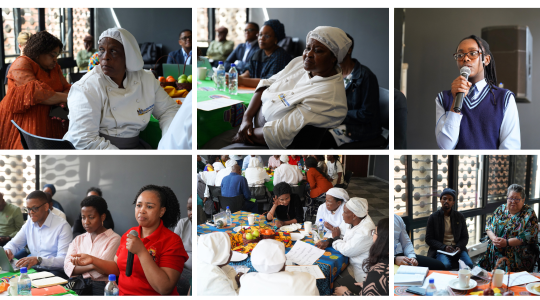
In September 2024, the Labour Research Service hosted the colloquium Food in Schools is a Social Justice Issue at Constitution Hill, Johannesburg. Representatives of the Volunteer Food Handlers (VFHs) and learners from schools in Gauteng led the conversations. The colloquium brought together role players committed to strengthening the National School Nutrition Programme (NSNP) and ensuring the rights of volunteer food handlers as workers.
Participants included:
- National Association of School Governing Bodies
- HEALA (Healthy Living Alliance), a food justice advocacy coalition
- Section 27, a human rights organisation
- Amandla.mobi, a petition platform building power for low-income black women
- Trade unions in the education and health sectors
- International Labour Organisation
- Webber Wentzel, a law firm providing pro bono support to food handlers in partnership with the LRS
- Five national ecological organisations
- Donors supporting the struggles of food handlers: Friedrich Ebert Stiftung South Africa and the Foundation for Human Rights
- Independent researchers from Wits University and the University of London
- Five Gauteng-based community organisations
Media: Eye Witness News and Workers’ World Media Productions
Colloquium outcomes
Food handlers as women nutritional activists
Food handlers have a growing identity as women nutritional activists that goes beyond their two year contracts as food handlers in the school. The nutritional activist identity continuous to be about work and but now this work is seen as contributing to the broader community beyond the school. Those whose contracts have ended are looking to use their expertise from working in the NSNP, to grow community gardens and initiate community kitchens – essential for addressing the growing levels of food poverty in South Africa. This growing identity as nutritional activists is what is shaping a broader movement building identity independent from a workplace focused trade union identity. In 2025 a series of forums are planned to discuss how food handlers will negotiate with the Department of Education at national, provincial, district and school levels. These discussions will further assist food handlers in shaping the organisational form of their growing movement.
Support from stakeholders
Ecological groups at the colloquium identified synergies with the work they are engaged in and the potential role of the NSNP and the work of the Food Handlers in strengthening the struggles for food sovereignty.
I valued hearing the children's knowledge and awareness of their connection and appreciation to the soil (land) which grows the food. An understanding which brings a different way we relate to food, connected to culture; the way people live, appreciate and see food. It was so nice that the learners know the nutritional value and benefit provided by the three sisters - how they are grown together in the garden in natural and organic ways that support each other's growth, ways in which people could mimic in their everyday lives to support each other's growth and well-being). Food handlers spoke about wanting to do more, leading school gardens, teaching children to grow food, or training youth in cooking for large numbers of people. They have the skill and passion, but face real challenges. The possibility for solutions and partnerships stood out. Stakeholders were there to listen and support. Food Handlers can be central agents of change in school nutrition and community well-being, if we recognise the knowledge and experience of those on the ground when building alliances.
— Dumisa Mguda, Facilitator at Sustainability Matters.
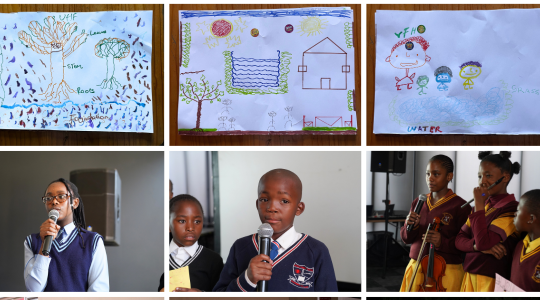
After the colloquium, Volunteer Food Handlers represented themselves at the HEALA Schools Food Environment Assembly. HEALA is a coalition of civil society organisations advocating for equitable access to affordable, nutritious food by building a more just food system.
280 participants, including NGOs, government, activists, researchers, food suppliers, educators, school governing bodies and learners attended the HEALA assembly. HEALA recognised the significance of Volunteer Food Handlers speaking in their own name, a milestone as food handlers had never before had a public voice.
"The LRS Colloquium shed light on the systems involved in the National School Nutrition Programme and the social justice issues that not only accompany but also hinder good nutrition. Understanding the broader systemic failures helped HEALA understand the landscape and reevaluate its organisational demands. The asks from the Food Handlers for greater investment in staff and infrastructure are uniform to HEALA’s. This means training, access to fair wages, improved procurement, and a higher budget allocation."
— Petronell Kruger, Programme Manager at HEALA
Trade union interest in the struggles of the Volunteer Food Handlers.
Trade union representatives participated actively in the colloquium and acknowledged that they needed to pay more attention to the conditions and status of food handlers in the schools they organise in.
Support for advocacy and negotiations
The law firm Webber and Wentzel will support the engagement of food handlers with Departments of Employment and Labour and Basic Education in 2025. The legal engagement is intended to formally request the department to respond to the lack of decent work and dignity.
LRS has a new partnership with the Foundation for Human Rights through a small grant supporting our work with Volunteer Food Handlers.
Impact on women
The Volunteer Food Handlers are bringing the issue of women and local food production into the public eye by showing how programmes like the NSNP can be more when sourcing locally produced food and relying on local indigenous forms of knowledge for strengthening food sovereignty.
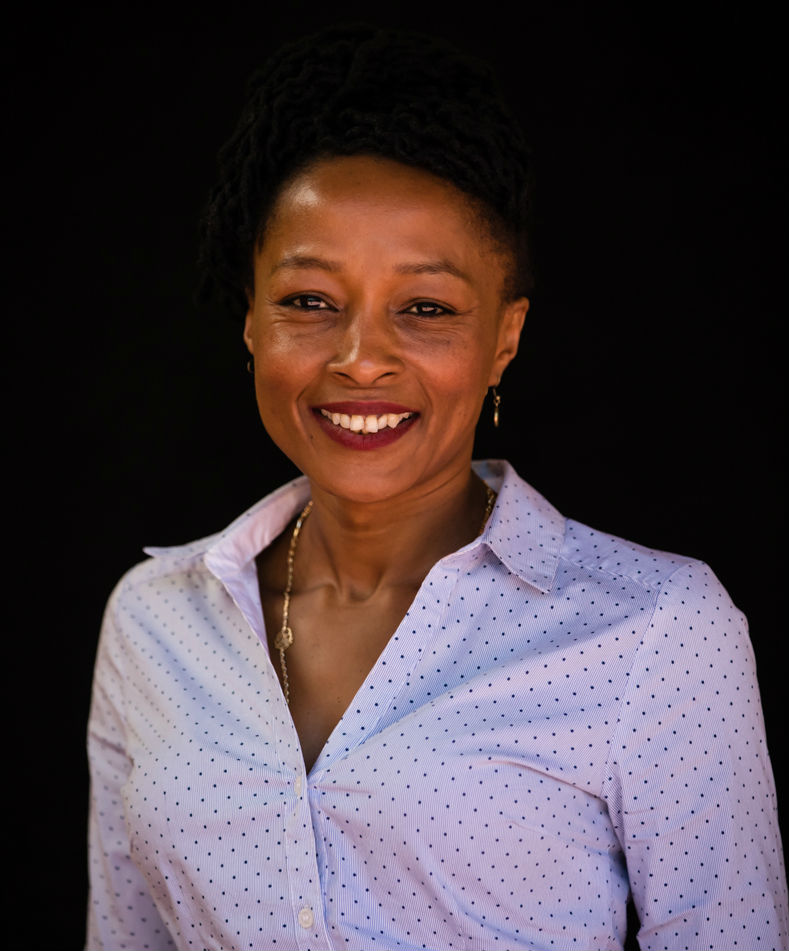
As a researcher, I am interested in invisible economies of care and how women's social reproduction and adaptive labour contributes in food systems, and to what extent development finance recognises it. I want to understand what that social reproduction labour looks like, what adaptive labour looks like, how do we consider it as value in terms of economic work and climate adaptation work. In the Colloquium, it was about reorienting my own practice. We cannot have policy conversations or programmatic conversations without the voices and the bodies of the everyday labour that makes those systems work. They are an embodied part of me now. I carry them with me everywhere, so whatever space that I am in, whether a policy conversation around agroecology, or a project meeting with the City of Cape Town or a food system dialogue where I am a panellist or a participant, in those spaces that I present, I make visible the Food Handlers.
— Nthakoana Maema, Researcher and Activist
RELATED CONTENT
PowerUp Nutrition eBooks series:
Jabula Song – Jabula means to rejoice, to be happy. The song co-created with Volunteer Food Handlers expresses their commitment and passion for ensuring the success of the school nutrition programme.